
What does Home mean when you are rarely there?

There was a time when home was defined by permanence. It was a fixed address with familiar routines. Somehow, the repetition brought comfort to our lives as steadiness and stability were responsible for the tempo in which we lived.
In today’s fast-paced global village, for many people, especially in urban areas, life looks very different. Home exists between boarding gates and project deadlines, between Abuja and London. Late nights at work and early flights out are common realities to working professionals. Some people spend more time in hotels than in their living rooms and return home only long enough to repack a suitcase before leaving again.
And yet, the desire for home remains deeply human.
Home defined as a place of constant presence is now more a place of return. This reinterpretation changes the way we think about interiors. For people who travel constantly or live between cities, home must mean easy maintenance first. Secondly, and this is even more important, home becomes the emotional infrastructure. Returning home should mean that you found a quiet place which absorbs the pace of the outside world.
For example, coming home to a bedroom that immediately softens the nervous system after a long-haul flight. Or being surrounded by lighting that transitions gently from work mode into rest. A home filled with materials that age beautifully because permanence becomes comforting in a transient life. These details may appear small, but they shape how a person feels the moment they walk through the door.
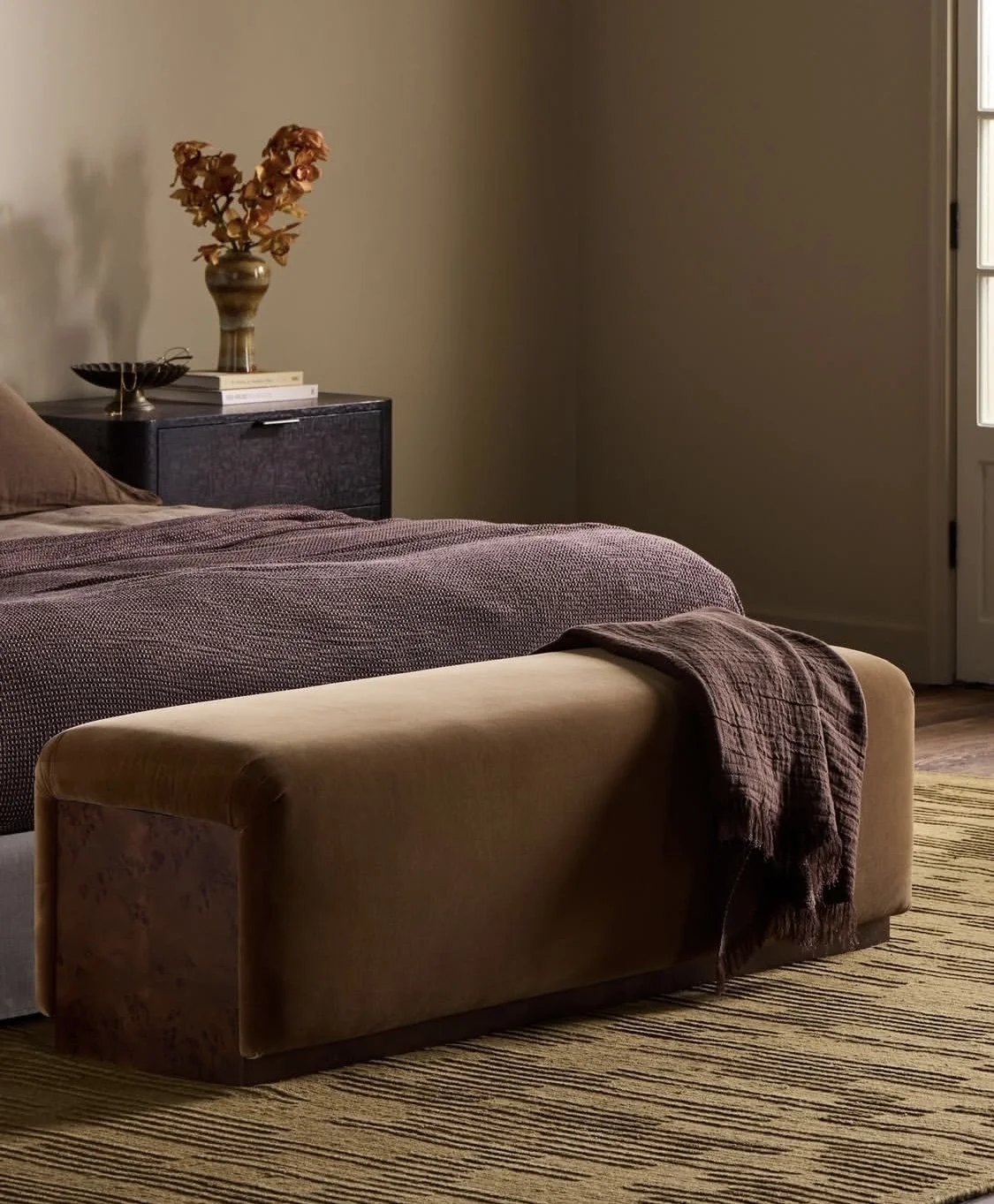
People who are rarely home experience space differently. They notice atmosphere almost immediately, through the scent of a room, the lighting temperature or whether a space feels calm or demanding. From a psychological perspective, absence increases sensitivity.
We often think luxury means more. More rooms and more statement pieces. But for people living fast-moving lives, true luxury increasingly looks like clarity. Spaces that are edited and that feel grounding rather than performative. The amount of hours spent in your home are less important than the quality of how your home restores you deeply.
This is why thoughtful interior design matters.
Beautiful spaces do not solve everything you are facing and juggling at the same time, but can and should support the way you live, move, and especially rest and return. Understanding your needs and translating these into homes that will work for you, is something we would love to help you with.
Contact us for creating your place of return and recharge.
