
On Influence, Design Taste, and Learning to See
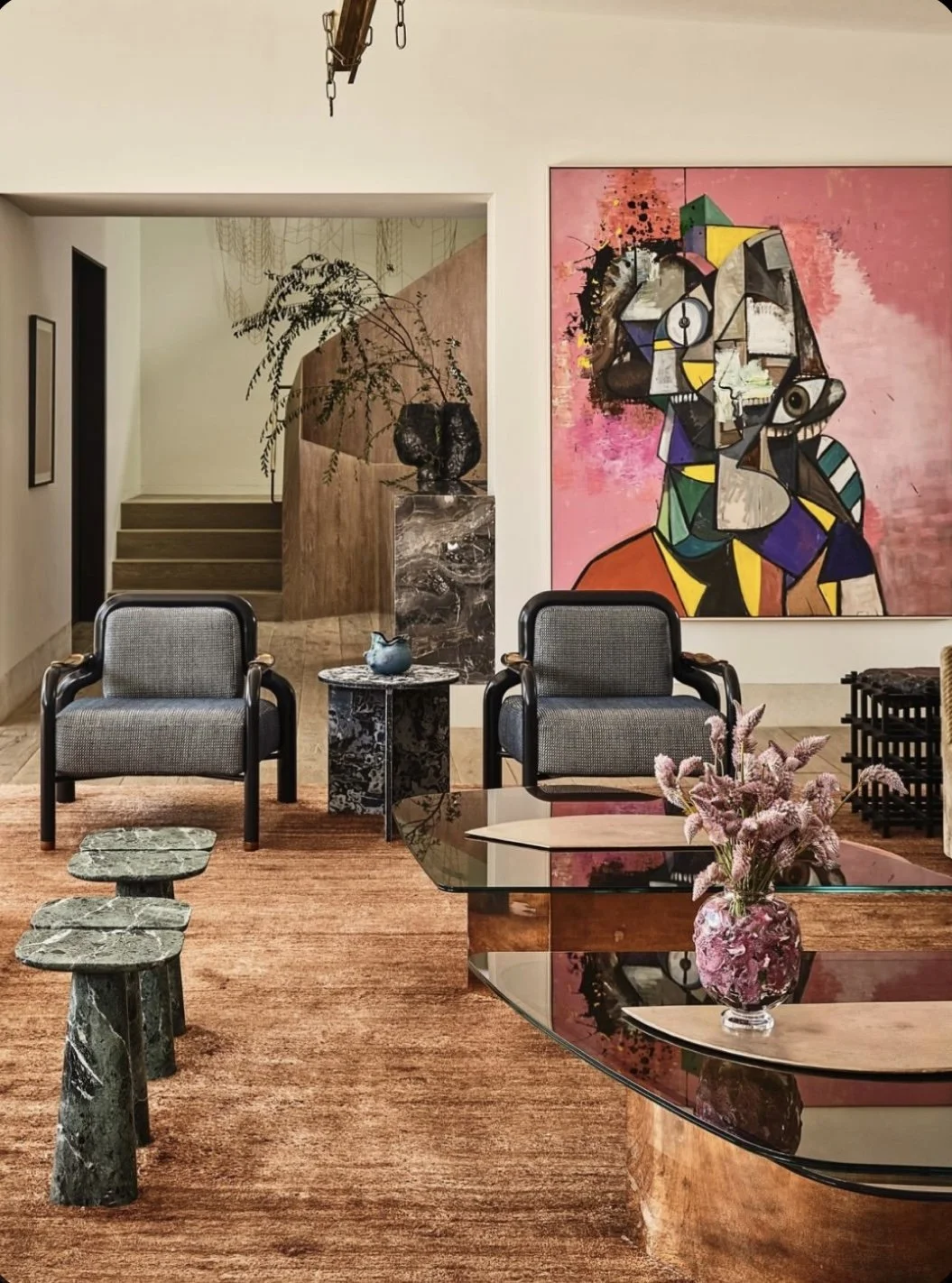
Design: Kelly Wearstler
Before I could design spaces, I had to learn how to see them. Not how they photograph, but how they hold life within them: how they age, how they respond to light over time, how they feel when no one is watching and could hold up the real life conditions by which it is tested. Taste is rarely instinct alone. While intuition plays a role, preference and discernment are learned skills. They are trained through exposure, curiosity, and the humility to study the work of others without attempting to become them.
This Blog is not a list of favourites. As much as this list exists in my head, I want to reflect on influence. I often think about the designers who shaped how I understand proportion, flow, layering and boldness. Some entered my life early, others I discovered just recently. But all of them taught me something essential. What matters most to me is not their aesthetic signatures, but the principles beneath them. The recurring question has always been when I am smitten by what I see: why does this work?
And in answering it, these influences helped clarify not only the kind of designer I want to be, but also the kind I consciously chose NOT to become.
On Restraint, Proportion, and Quiet Confidence
There is a particular kind of confidence that doesn’t announce itself. It lives in proportion and in material choices that do not chase attention.
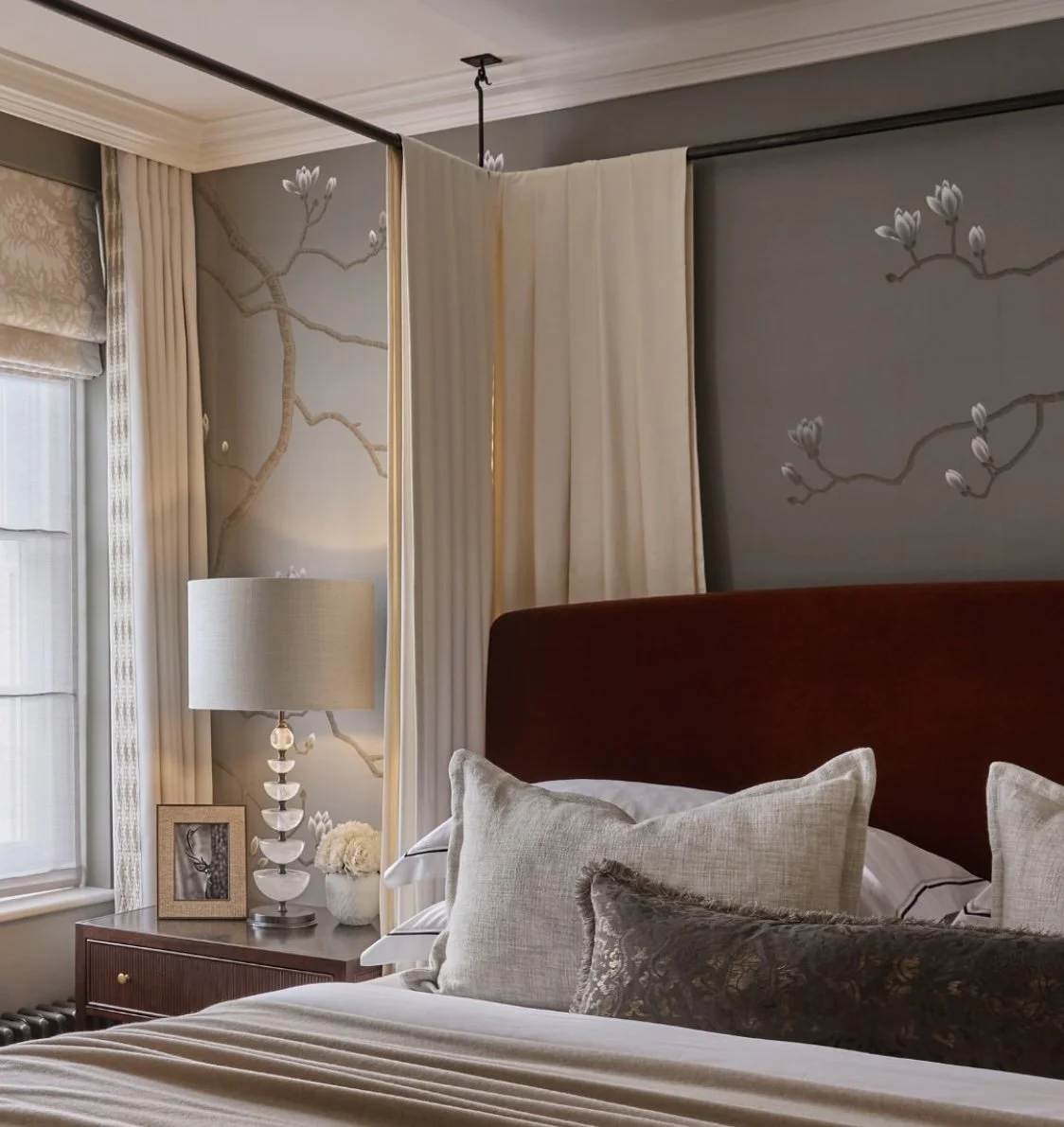
Design: Sophie Paterson Interiors (UK)
The work of Anne-Marie Barton, Sophie Paterson, and Katharine Pooley, albeit all different design languages, demonstrates that restraint is one of design’s most refined expression. Texture, layering, and balance take precedence over spectacle, allowing spaces to unfold slowly rather than overwhelm you at first glance.
Their interiors are testament that luxury is often a matter of editing. Calm rooms are rarely accidental. Every line, tone, and moment of negative space is considered with intention. These are spaces that do not rush to impress but reveal themselves gradually, rewarding those who spend time within them.
This sensibility deeply informs how I approach intimate spaces, particularly bedrooms and private living areas. Their work has sharpened my sensitivity to scale. In a world saturated with visual noise, choosing quiet is deliberate and reinforced my belief that silence has a place in design.
On Courage, Narrative, and Personal Voice
Bold design, when done well, is never reckless. Designers such as Kelly Wearstler, Greg Natale, Ken Fulk and Natalia Miyar demonstrate that maximalism can take many different shape and forms. It also requires as much discipline as restraint. Their portfolio taught me that design must be anchored, that layers need structure, and that personality does not excuse chaos.
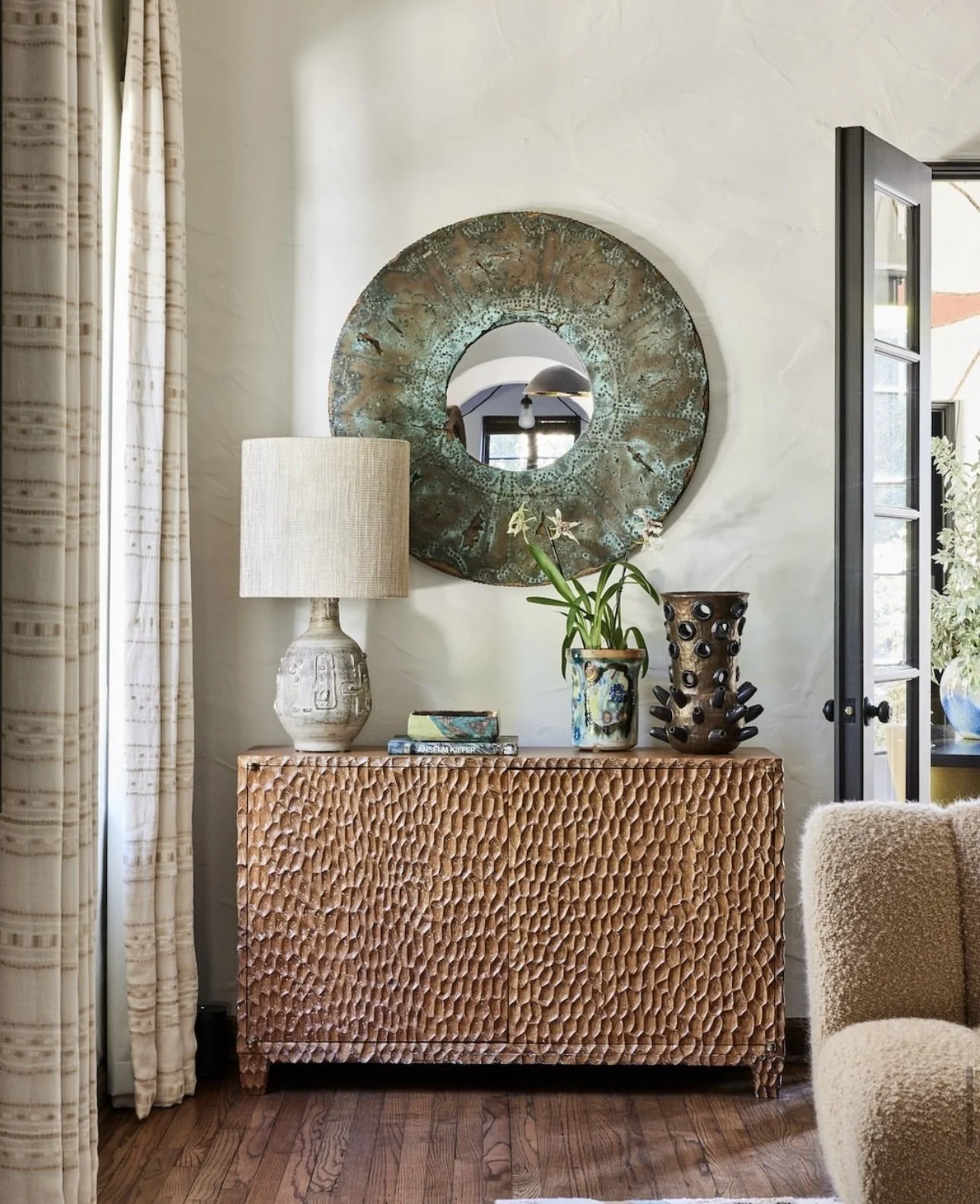
Design: Natalia Miyar
What distinguishes these designers is not their fearlessness, but their control. Colour, pattern, and materiality are used in service of a story rather than as decoration for its own sake. Rooms feel expressive without losing coherence.
These influences surface most clearly when I encourage clients to take a step further than what feels immediately safe. There are moments in a project where caution produces something correct, yet feels incomplete. Moving the envelope and knowing when to say, “this needs more boldness,” feels easier to do when thinking about how much their design language shaped the industry.
On Livability and Modern Clarity
Yet, design ultimately has to live with people. Designers such as Benjamin Johnston, Ray Booth, Suzanne Kasler, Adam Hunter, and Shea McGee reinforce the idea that beauty must function effortlessly in daily life. Their work shows that comfort is not the enemy of good design, and that functionality, when handled with care, can be deeply beautiful.
Adam Hunter’s interiors, in particular, strike a balance between warmth, artistic expression and modern restraint. They feel current and composed without being fleeting. The mastery of space planning by Ray Booth or the sophistication in Johnston Interiors are invaluable lessons when designing family homes and long-term residences. Their work exemplifies adaptation and how to age well. These interiors support routines, relationships, and rituals so seamlessly.
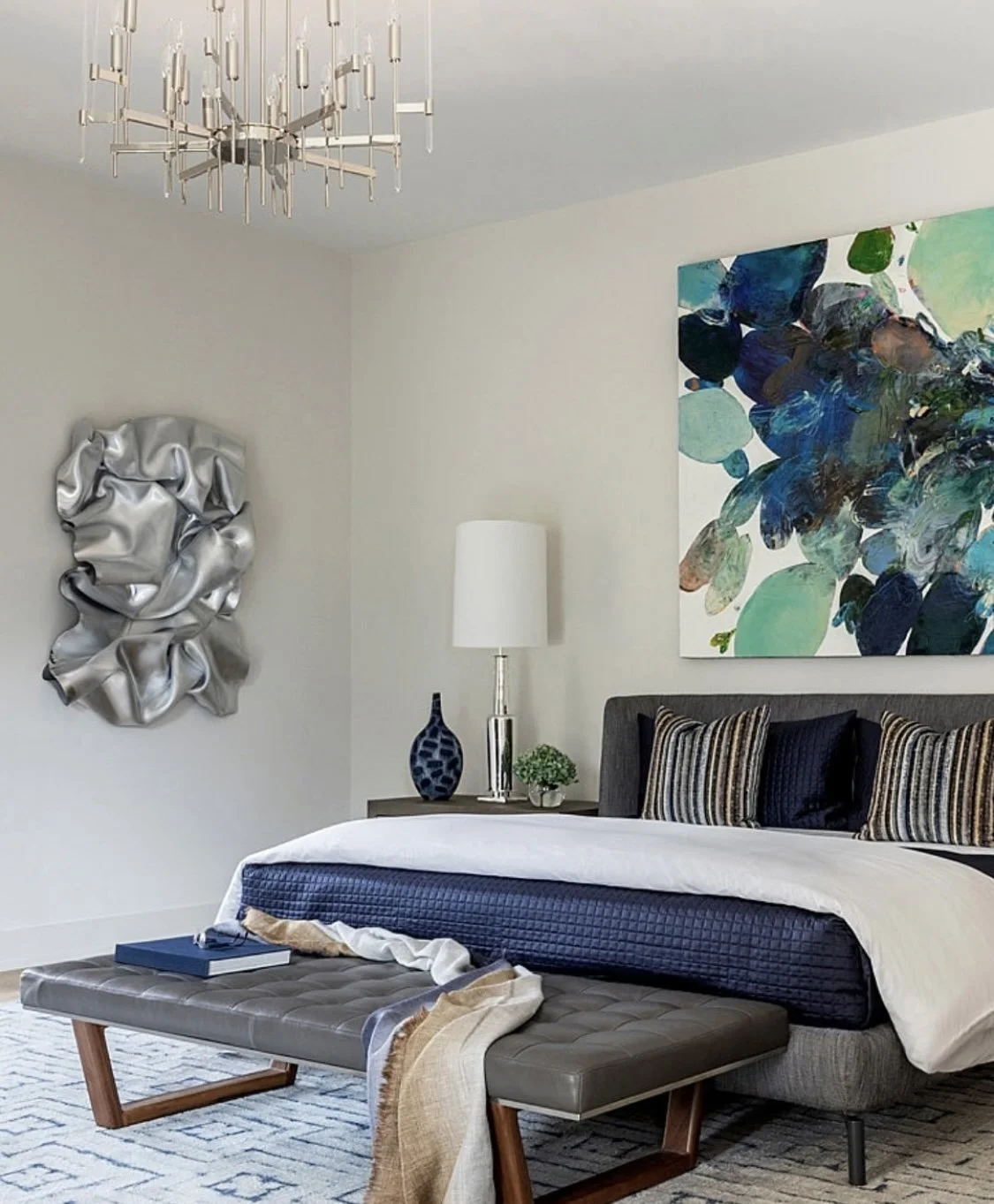
Benjamin Johnston Design
On Identity, Culture, and Design Beyond Interiors
Some influences extend far beyond rooms.
How can you compile figures such as Jeremiah Brent, Thomas O’Brien, David Flack, Widell & Boschetti, and Lenny Kravitz into one section? They all show that design is inseparable from worldview. I find their spaces all to carry memories, different eras, emotion and cultural context so effortlessly. The identity of their spaces cannot be styled into existence, but must be understood first.
Thomas O’Brien’s work, for example, bridges classicism and modernity with remarkable ease, demonstrating that continuity and evolution are not opposing forces. Widell & Boschetti foreground craftsmanship and material honesty, while Lenny Kravitz’s approach to product and lifestyle design illustrates how cross-disciplinary thinking can infuse interiors with LOTS of attitude and soul. His design storytelling is bold and could have been easily mentioned in an earlier section, yet thinking about his Brazilian hacienda and his Parisian townhouse alike pays so beautifully homage to its various cultural contexts and backgrounds.
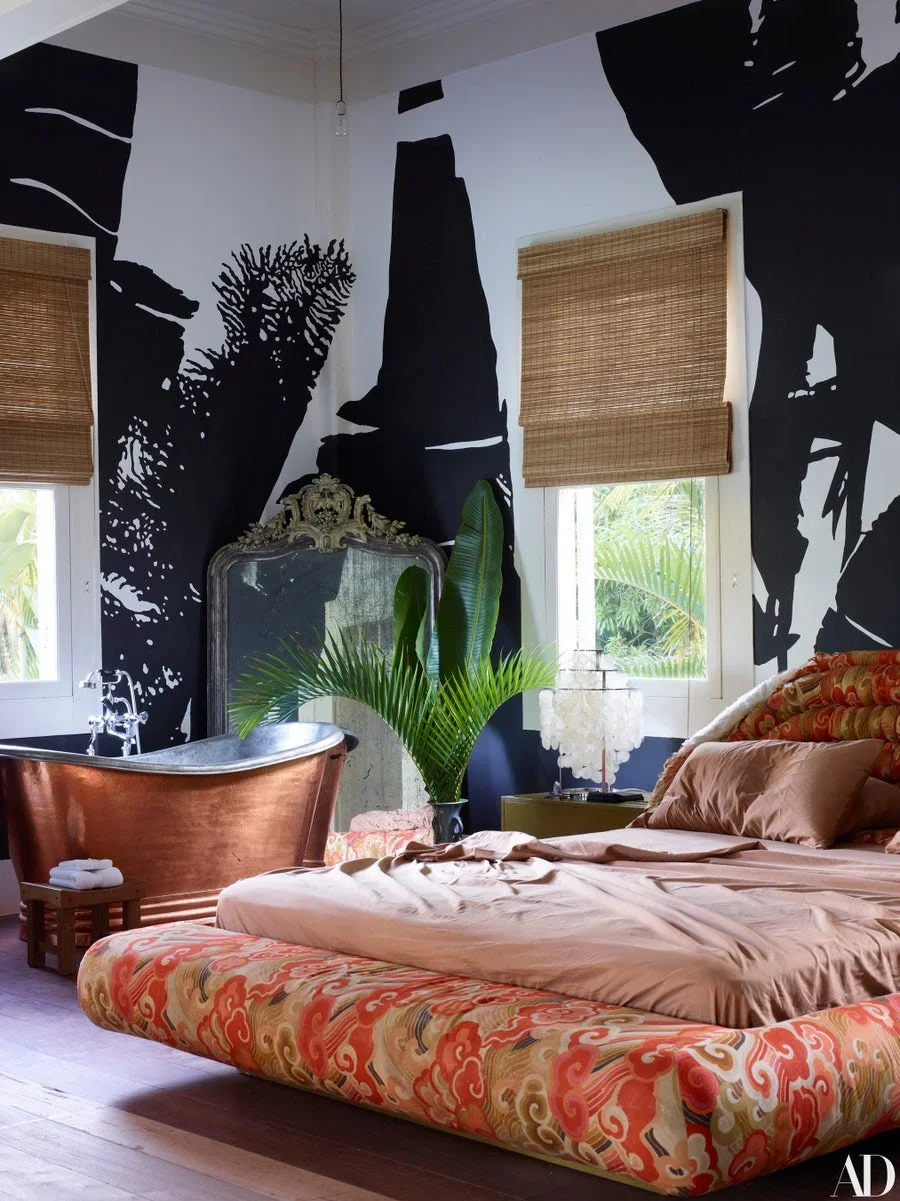
Design: Lenny Kravitz by AD
Many African studios, such as Yinka Ilori’s, offer a compelling example of how colour, craft, and cultural narrative can coexist with contemporary design language. And I think this is where my own multicultural experience somehow resides. Design has always been intertwined with movement, memory and place. For me, you cannot simply source for the soul of a space you are creating. It must be cultivated over time and that is a tricky part of the work when timelines are short and you are pressed to deliver a „finished product“.
Equally formative were the decisions about what to leave behind. With time, and the more I understood which designers I take great inspiration from, I learnt to consciously resist trend-driven aesthetics, over-designed spaces, and performative luxury. These approaches may photograph well, but they rarely sustain meaning over time.
How This Shapes AD Design Today
All of these influences inform how we work at AD Design. They shape our process, our emphasis on responsibility, and our commitment to human-centred design. They guide how we collaborate with clients, prioritise long-term value, and ask questions early, especially about how a space will be lived in.
For clients and fellow designers alike, this approach matters because good design focuses on alignment. When principles are clear, decisions become easier, and spaces gain depth rather than decoration.
Influence as Lineage
Design does not exist in isolation. We all stand on the shoulders of those who came before us. But being influenced by accomplished professionals doesn’t mean competition, but should be seen as lineage. Copy-and-paste doesn’t just work. Good design evolves through dialogue, observation, and reinterpretation in a new context. The goal is not to replicate what already exists, but to learn how to see more clearly. Which then leaves room for new design magic.
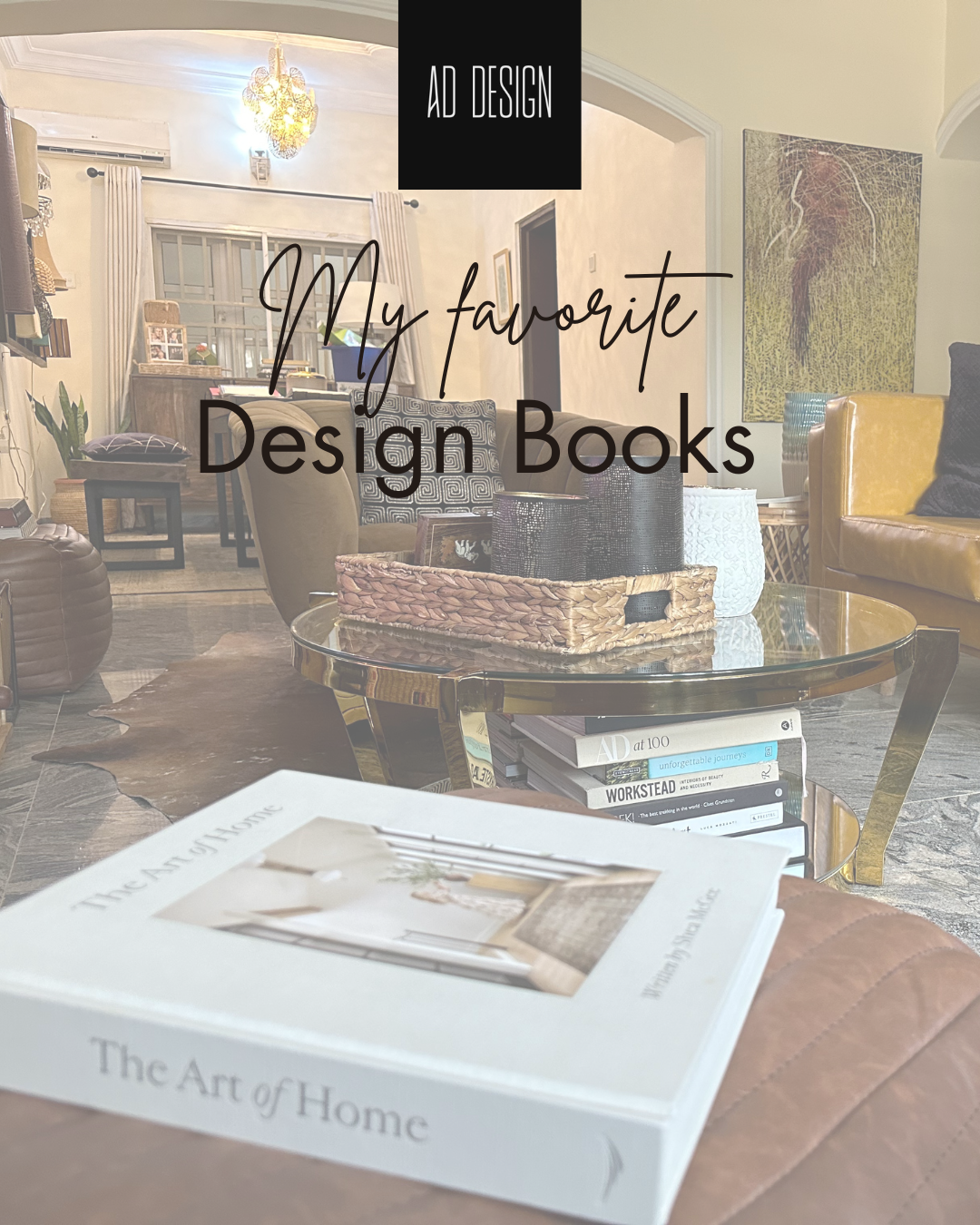
More: Reading & Watching List
For some more inspiration, check out our Blog Post on our favorite design books or our Design Library under Highlights on our Instagram page.
Or look for our Blog Post on our favorite YouTube design channels.
