
Gardens of Meaning: What Islamic Garden Design Teaches Us About Living Well
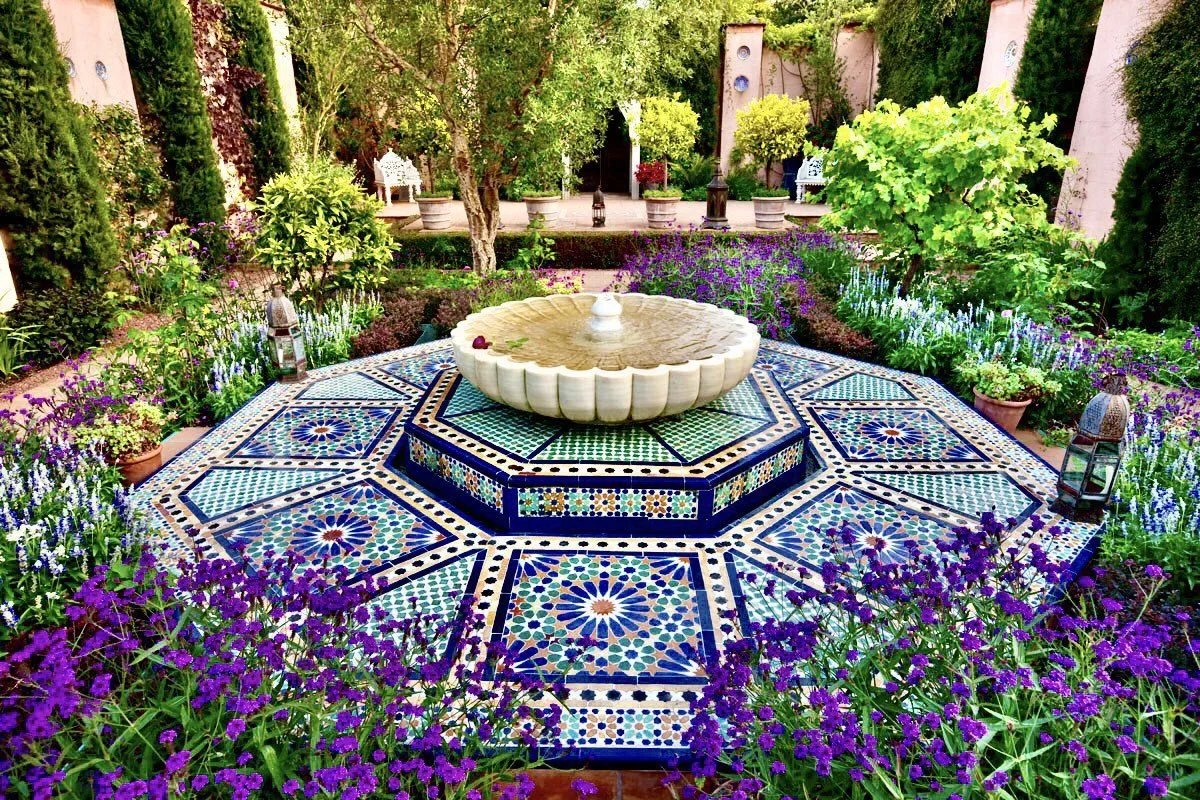
Islamic garden design is rooted in something far deeper than aesthetics. It is shaped by Quranic descriptions of Jannah (paradise), imagined as an enclosed, serene sanctuary defined by shade, flowing water, symmetry, and abundance. These gardens were never meant to impress from afar; they were meant to hold you, to cool the body, quiet the mind, and gently turn your heart inward.
You don’t have to be Muslim to feel their power. You don’t need to share the faith to understand the intelligence behind them.
You only need to slow down enough to notice how these spaces are composed: with intention, balance, and deep respect for life. At their core, Islamic gardens invite you to experience how your soul can be restored through nature, order, and reflection.
A Worldly Interpretation of Paradise
At the heart of Islamic garden design lies the „chahar bagh“, a four-fold, quadrilateral layout that divides a square or rectangular garden into four equal parts, often defined by water channels or paths. This geometry is more symbolic than it is decorative. It echoes the rivers of paradise described in the Quran and reflects a worldview rooted in balance, order, and intentionality.
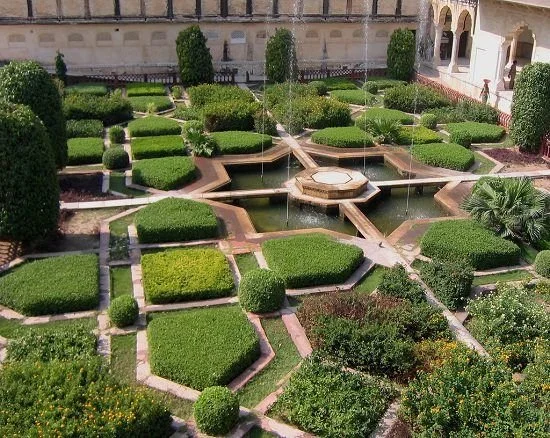
This structure creates visual calm the body instinctively trusts. Even in contemporary outdoor design, the principle remains powerful: clear paths, repeated proportions, and thoughtful alignment bring a quiet elegance that never dates.
Water flows through the centre, sometimes as a fountain, sometimes as narrow channels (chadars), sometimes as still, reflective pools. These elements cool the air and invite contemplation. Water becomes mercy, movement, and life - and remind us of how precious and sustaining this resource truly is.
In modern homes and garden setting, this translates beautifully: a modest fountain, a reflective water bowl, or even the subtle sound of moving water can transform a garden into a place of rest and recalibration. We humans seek for these moments and it is no surprise that several clients specified a water fountain, even inside their home, as a non-negotiable feature.
Tiles, Patterns, and the Art of the Ground
Look down in historic Islamic landscapes and courtyards and you will find mesmerizing stories beneath your feet. Tile layouts guide movement, define zones, and echo the architecture above. Repetition (or “flow”, in design language) creates rhythm and is fundamental to perceiving a space as harmonious. In contemporary gardens, this can be reinterpreted through patterned stone, terracotta tiles, or simple layouts that feel intentional rather than random.
Enclosure as Care
One of the most misunderstood aspects of Islamic gardens is enclosure, a concept that can feel counterintuitive in today’s open-plan culture. But walls here are not about exclusion. They rather establish a protective boundary between the outer world and an inner sanctuary, allowing the senses to soften.
Within these walls, the garden becomes intimate and human-scaled. In a world that constantly demands our attention, this idea feels both quietly radical and deeply timely to me.
These gardens understand climate and provide shade where its necessary through pergolas, arcades and trees which create microclimates of comfort. Good garden design always considers the human body: where you sit, where you walk barefoot, where you pause to talk - or simply breathe.
Planting with Purpose
Islamic gardens celebrate useful beauty. Plants are chosen not only for shade and form, but for nourishment. Fruit-bearing trees (pomegranate, fig, olive, date palm) coexist with aromatic plants like basil and jasmine. Everything serves more than one purpose: nourishment, fragrance, shelter, often all at once. The rising demand for edible landscaping and urban herb gardens is no surprise but lies in our innate need for sustenance and our desire to reconnect with cycles of care and stewardship. Beauty that feeds, literally and metaphorically, lasts longer.
Stewardship and Responsibility
Underlying all of this is the concept of Khalifa (stewardship), a respectful, nurturing relationship with nature. This philosophy continues to inform how we think about outdoor spaces today. Even though we don’t practice landscaping in the traditional sense, designing courtyards, terraces, and outdoor living spaces while honouring principles that are over a thousand years old is a driving force in our work. The historical references are living lessons in restraint, balance, and care.
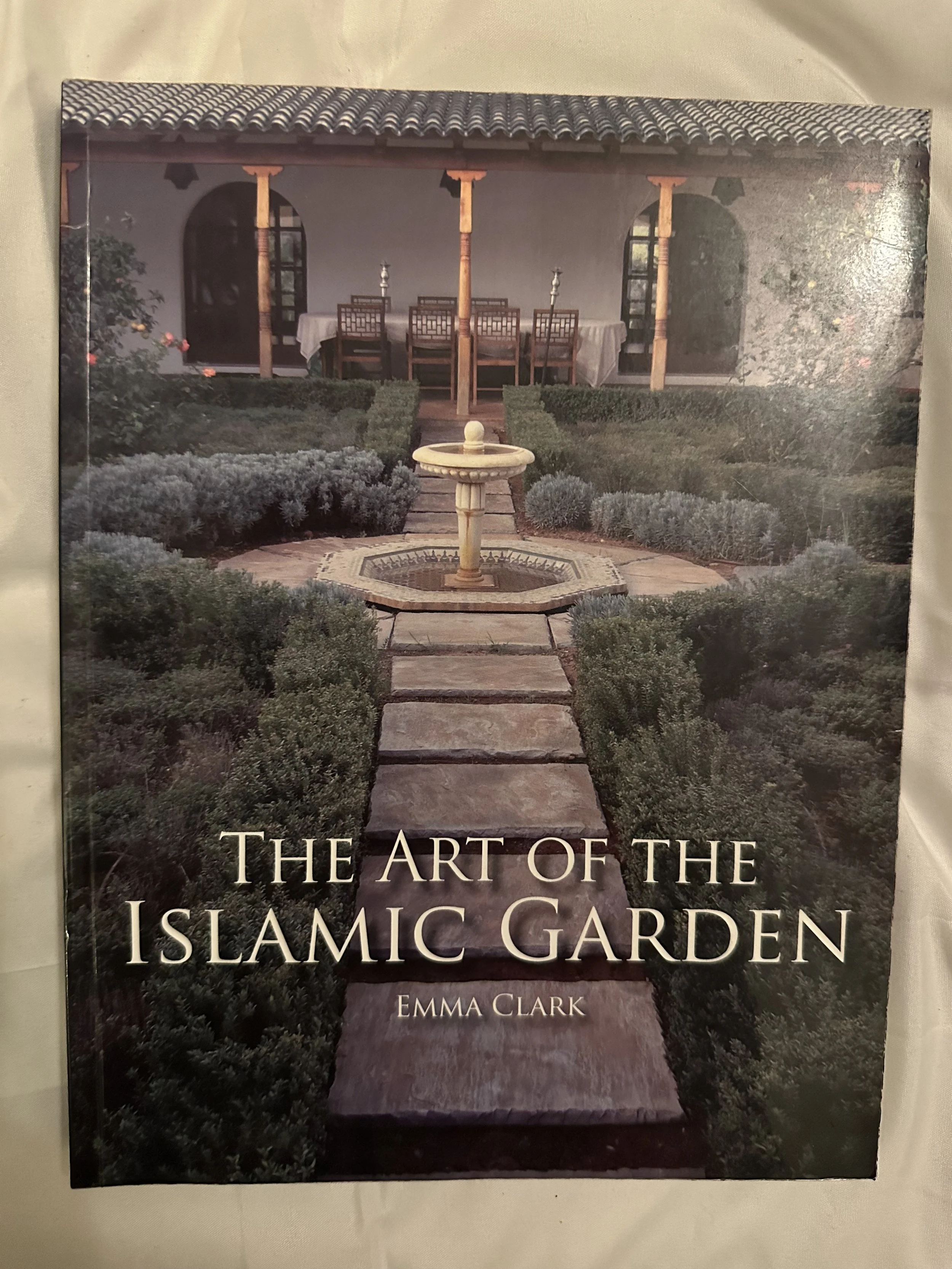
Much of this thinking is beautifully articulated in „The Art of the Islamic Garden“ by British garden designer Emma Clark, a book we return to often and have featured in our Design Library on Instagram.
Our Takeaway
Perhaps the most profound lesson Islamic gardens offer is this: beauty is not an end in itself. It is rather a means to inner peace, gratitude, and grounding.
Whether inspired by the courtyards of the breathtaking Alhambra in Granada, the layered landscapes of the Shalimar Gardens, or the quiet intimacy of a private riad in Marrakesh, these principles can be translated anywhere.
Islamic gardens do not ask to be copied. They ask to be understood. They offer a design language shaped by patience and responsibility and values how a space supports life over how it photographs.
Design, at its best, helps us to live better. Islamic garden design reminds us that stillness, nourishment, order, and beauty are not luxuries, but simple human needs. And when a space honours that, it quietly does what it was always meant to do: it gives something back - to everyone who is open to slow down a little.
