
On Beds, Memory, and the Responsibility of Design
Last Thursday, I was invited by a friend to an exhibition titled “Life, Memory & Beds” by Helen Gebregiorgis and Dabesaki Mac-Ikemenjima, held at Lisa Suites, Asokoro. I confirmed attendance without reading further, expecting, perhaps, a pop-up moment of textiles, a bed linen collaboration softened by some art pieces. Something gentle and pleasant, and most likely overpriced.
What I walked into was something else entirely. And it hit me in the gut.
And when art does that - when it bypasses intellect and goes straight to the body - it has succeeded. No amount of composition, symmetry, or design language can manufacture that kind of response. To my understanding, such emotion always comes from truth.
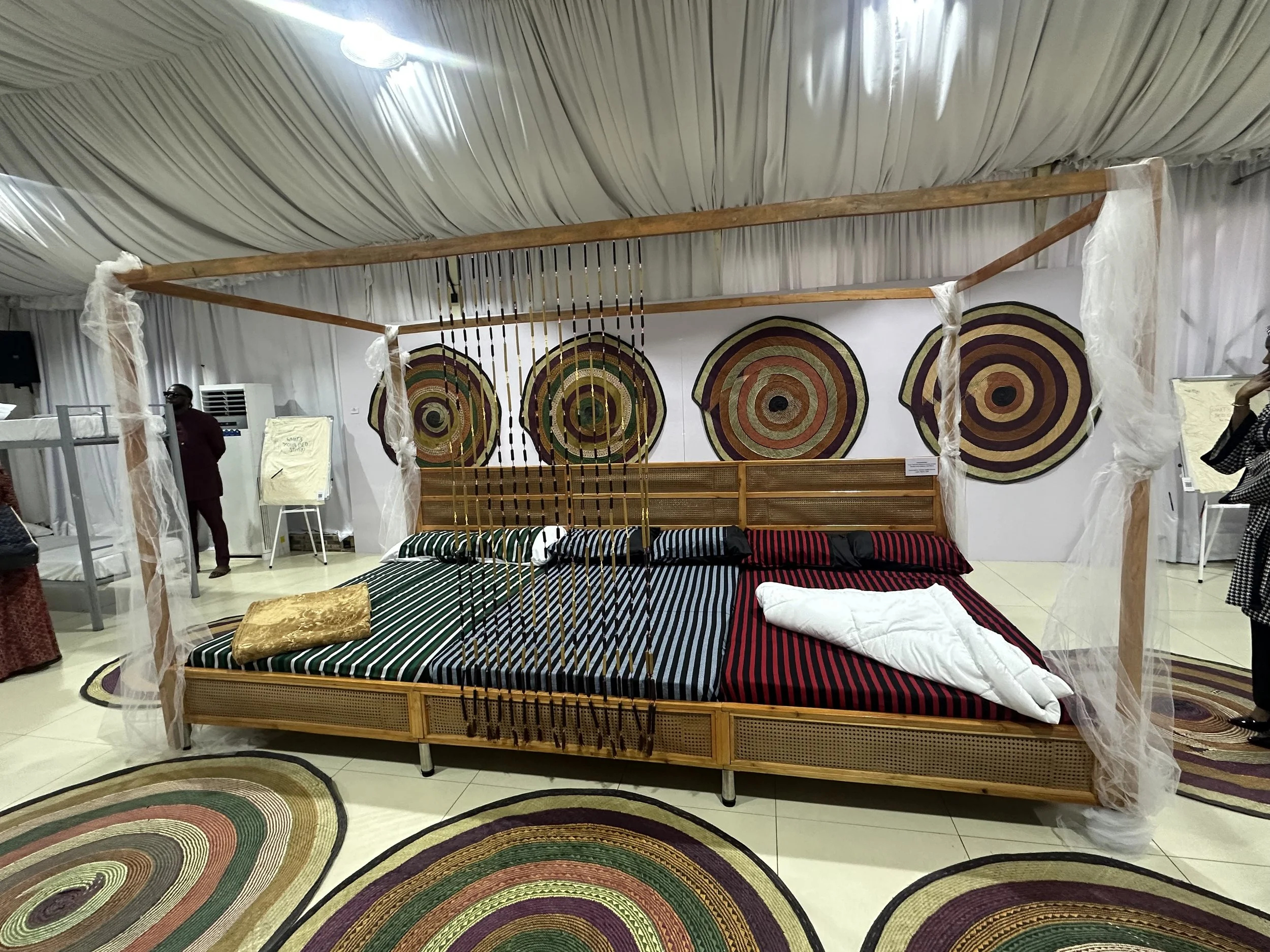
Displays of physical beds
The first bed that stopped me was a baby bed. A naked metal grid, silver and cold. Dressed with a thin pink sheet and a teddy bear placed gently in the corner.
From a design perspective, it was stark. Emotionally, it felt unbearable. I stood there wishing, almost instinctively, that the bed had more layers. More softness, more warmth, something cozy. Something that could wrap a child the way a mother’s arms would. And then another thought followed immediately: how many children do not even have this?
It was sobering to acknowledge once again that the luxury of a bed has nothing to do with the object itself. It is not about frames, finishes, or how many layers I would achieve with the best throw pillows. It is about what a bed promises: protection, safety, rest, nurturing. The feeling of being held. That is the real luxury - and can have many forms. But this didnt match the cold, clinical baby bed.
Another installation, a brainchild designed by both curators Gebregiorgis and Mac-Ikemenjima, was a massive communal bed. Overscaled, easily over three metres wide. A contemporary poster bed built with cane and timber, rooted in organic materiality. It could evoke many things at once: a polyamorous fantasy, or a family gathering. My friend suggested this to be a dream for young children piled together after a long day or over the weekend. A canvas for shared warmth and presence. It felt deeply African to me also, yet it could just as easily exist in Malaysia or Indonesia. It transcended geography. It spoke of togetherness and proximity, not ownership.
And suddenly, I was no longer in the exhibition space. I was remembering all the beds I had ever called home.
All the Beds I’ve Known
I thought of tents I once called home. Of mattresses thrown onto wooden planks in the back of a Mitsubishi Delica van while backpacking through New Zealand. Of farm stays to come by, university rooms, borrowed beds, spare rooms offered by strangers who became hosts. I remembered my early years in Nigeria, arriving as a volunteer around 2011/12. I shared a queen-size bed with up to three other children. It was not the comfort I grew up with. But it was warmth. It was accommodation. It was what belonging looked like at first in a new country I was trying to understand.
I remembered the moment I finally made a home in Abuja in 2020, at the beginning of the pandemic. An empty flat. No bed frame. Just a mattress on the floor. And yet, I felt like I had arrived. Beds, I realised, are “homecoming” and I placed this word on the flipchart board every guest was invited to write their own association of their bed story on. But how does homecoming look for others?
Beauty versus Meaning
The exhibition featured various bed stories from sixteen countries, many from Nigeria, Kenya, Germany, India, the States - each accompanied by short stories curated by the artist duo. Some beds were visually beautiful: symmetrical, styled, or framed by architectural details like vintage coloured glass window. None was out of a design book, but you could tell that there was intention behind some of the design principles that were applied. And yet, most of them felt uninviting and did not stimulate my design senses in any way.
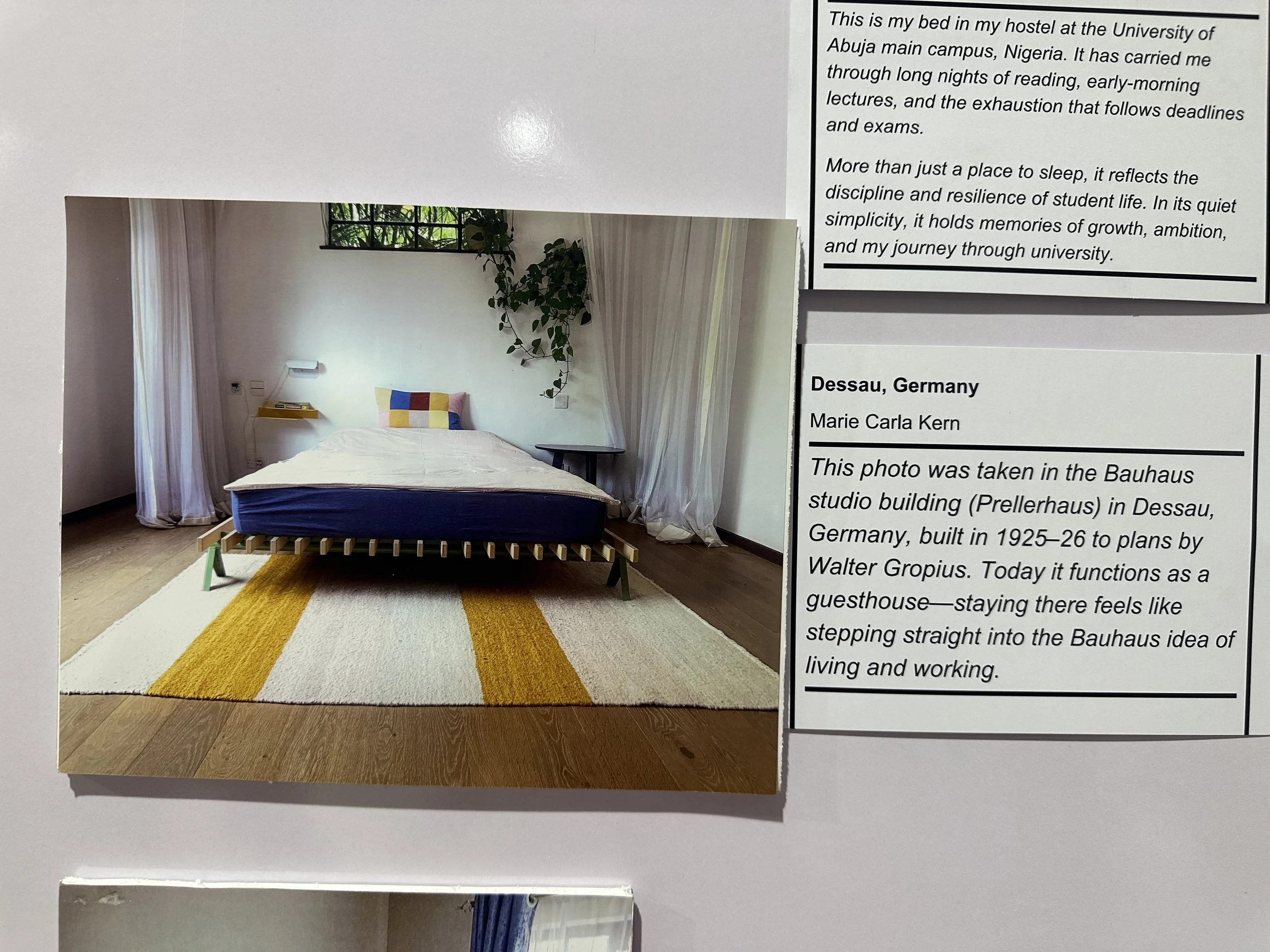
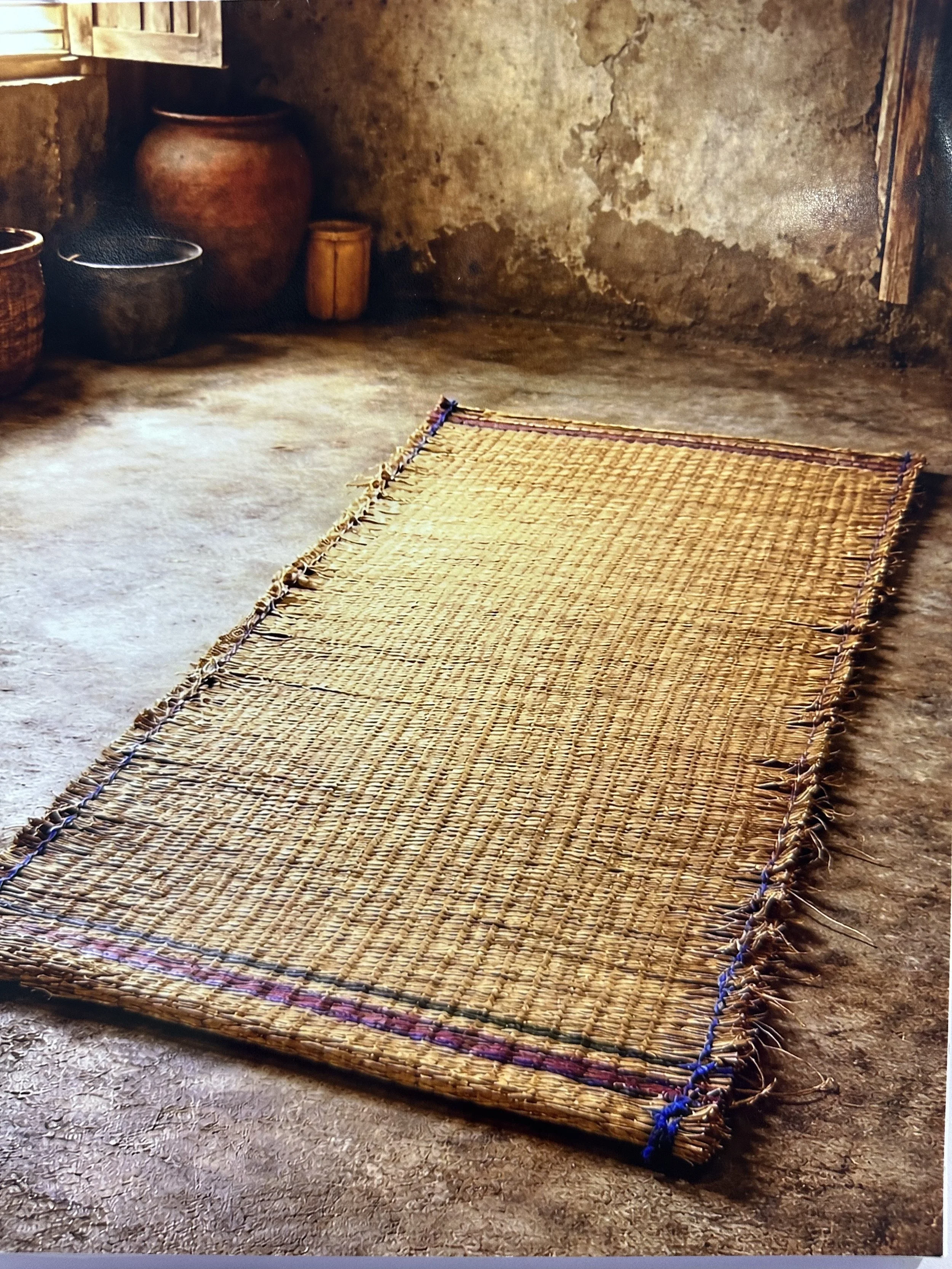
Then there were beds that, by conventional design standards, could be considered “flat” or even ugly. A simple rattan mat on a clay floor. A squished mattress in a sparse room. A totally rampaged room with belongings spread across the unkept bed and floors. But beside one image, a simple mattress with a blueish linen sheet, a caption read something like “This is the bed I shared with a friend who is dear to me”. And suddenly, this bed became beautiful. It was the human stories that touched me and made me reassess my work as designer as well. Because what makes a bedroom work is not visual perfection. It is, as with everything in life, emotional truth.
The Privilege of Designing Bedrooms
Bedrooms are not neutral spaces. They hold prayers, intimacy, rest, tears, conversations with God, conversations with pillows, climaxes, grief, hope. To be invited into that space as a designer is not just a commission, but a rare privilege. And I regard it as a huge responsibility to build something that would not only serve the people in their unique features and habituals, but also allow them to express themselves in the most authentic form they could to foster the most authentic relationships with themselves and their loved ones. That’s always the core for me in design.
No matter a client’s income, inventory, or aesthetic preference, everyone deserves that fundamental sense of shelter and ease. Of returning to oneself at night.
The exhibition really made me reassess my work, but majorly because my principles were reaffirmed. Good bedroom design is not about trends. It is about listening and understanding what rest looks like for that person. And then ultimately translating that into space, even if it means nothing more than a bare mattress on the floor.
There may be no accolades for that. No glossy magazine feature or design award. But there would be meaning and hopefully the kind of comfort the person is looking for.
What We Take Home
From an interior design perspective, the takeaway is simple, yet profound: at the end of the day, design is about how a space makes someone feel. Everyone, regardless of geography, income or design taste, deserves a bed that offers peace, safety and that sense of homecoming.
As designers, our responsibility is to honour that. To listen and to translate, without imposing our own goals or aesthetics on the client.
This exhibition reminded me why I do what I do. And why beds matter more than we ever admit. Even though I personally still prefer them with some good mattress, soft linen and cozy set of pillows.
