
Design Confession: Beautiful Tile Is As Useless As Your Ex If It Doesn’t Match Your Daily Needs
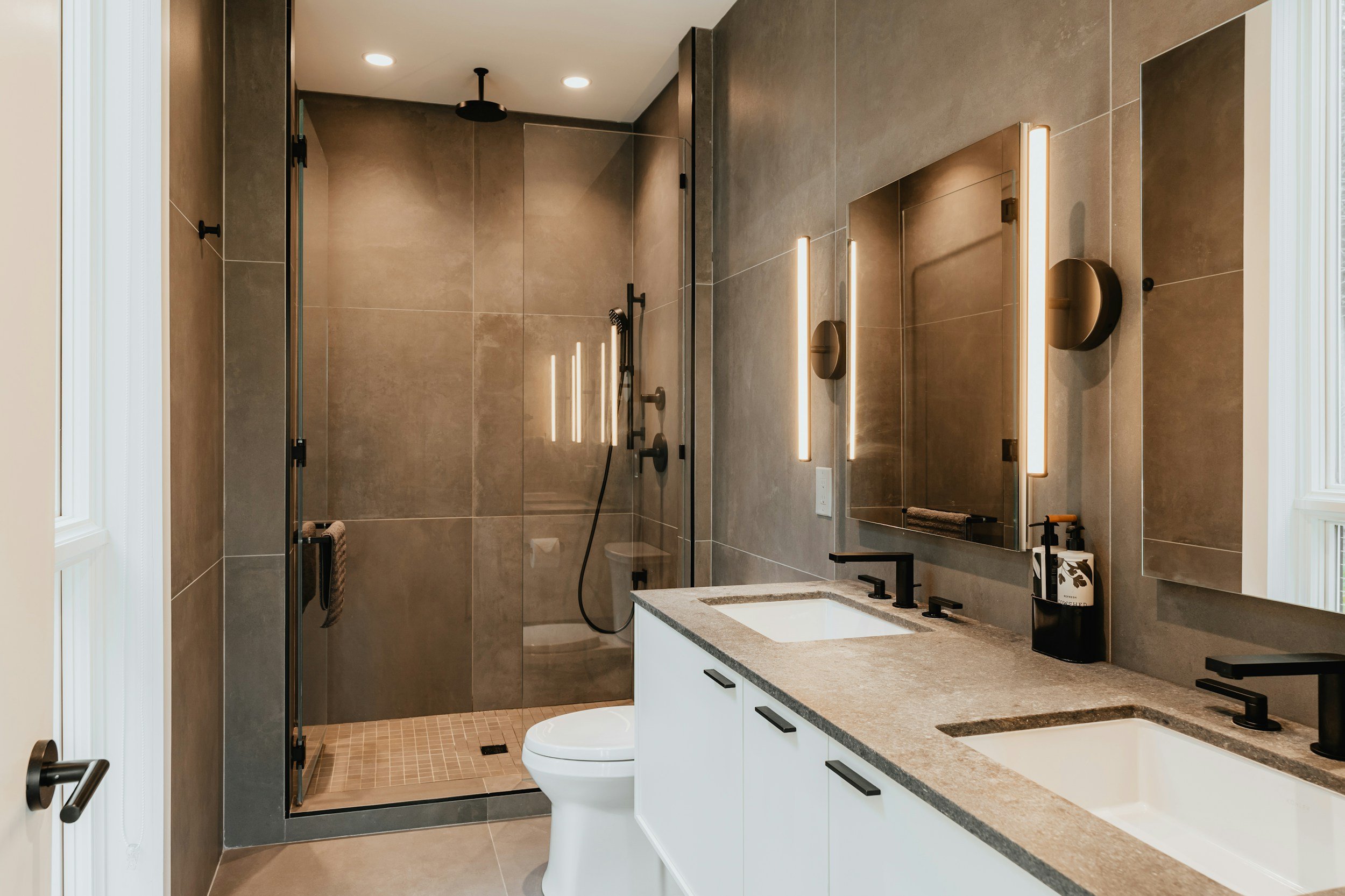
Uninspired, outdated, without character - just like your ex.
Or in other words: not every beautiful material must be applied to the max.
In the age of endless inspiration boards and picture-perfect interiors, it is easy to fall in love with a striking tile and imagine it covering every surface of a space. The reality, however, is that interiors are meant to be lived in - by humans without an endless budget. Materials must withstand daily routines, constant cleaning, humidity (the Sub-Saharan one hits differently!), (curry) spills, and wear. If a finish cannot handle that reality, its beauty becomes short-lived.
Good design cannot only consider great taste and what makes the most impressive picture. The responsibility rather lies in choosing materials that continue to work long after the photos have been taken.
This does not mean sacrificing character or visual richness. In fact, the most successful interiors balance both: finishes that are durable enough for daily life while still contributing personality and atmosphere. The key lies in where and how a material is used.
Designing with Intention, Not Excess
One common mistake in contemporary bathrooms is the urge to tile every surface from floor to ceiling using the same large-format slab or highly polished stone. While the result can feel luxurious at first, it often leaves the space strangely flat and anonymous.
Tiles, in our view, offer far more design potential than simply covering walls. Texture, pattern, scale, and layout all contribute to the architectural character of a room. Ignoring those possibilities is a missed opportunity. A thoughtful bathroom composition relies on contrast and intentional restraint rather than excess.
A Boutique Powder Bathroom Example
A powder room is the perfect place to experiment with materials while still keeping practicality in mind.
Instead of covering the entire room with one tile type, imagine a more layered approach. The floor could be finished with a timeless choice such as penny tiles, which are not only visually charming but also highly practical. Their small format creates natural grip, making the floor less slippery in a humid environment.
Along the walls, classic subway tiles provide a timeless foundation. Their simple geometry works with both modern and traditional interiors and allows colour to become the defining feature. Choosing a bold tone, i.e. deep forest green, oxblood, navy, or a warm terracotta, adds personality without overwhelming the space.
To introduce texture and a sense of sophisticated craftsmanship, a fluted or ribbed tile border could frame the sink, the entire room or mark the transition between wall sections. This creates enough visual interest and tension without requiring the entire wall to be clad in high-maintenance textured tile.
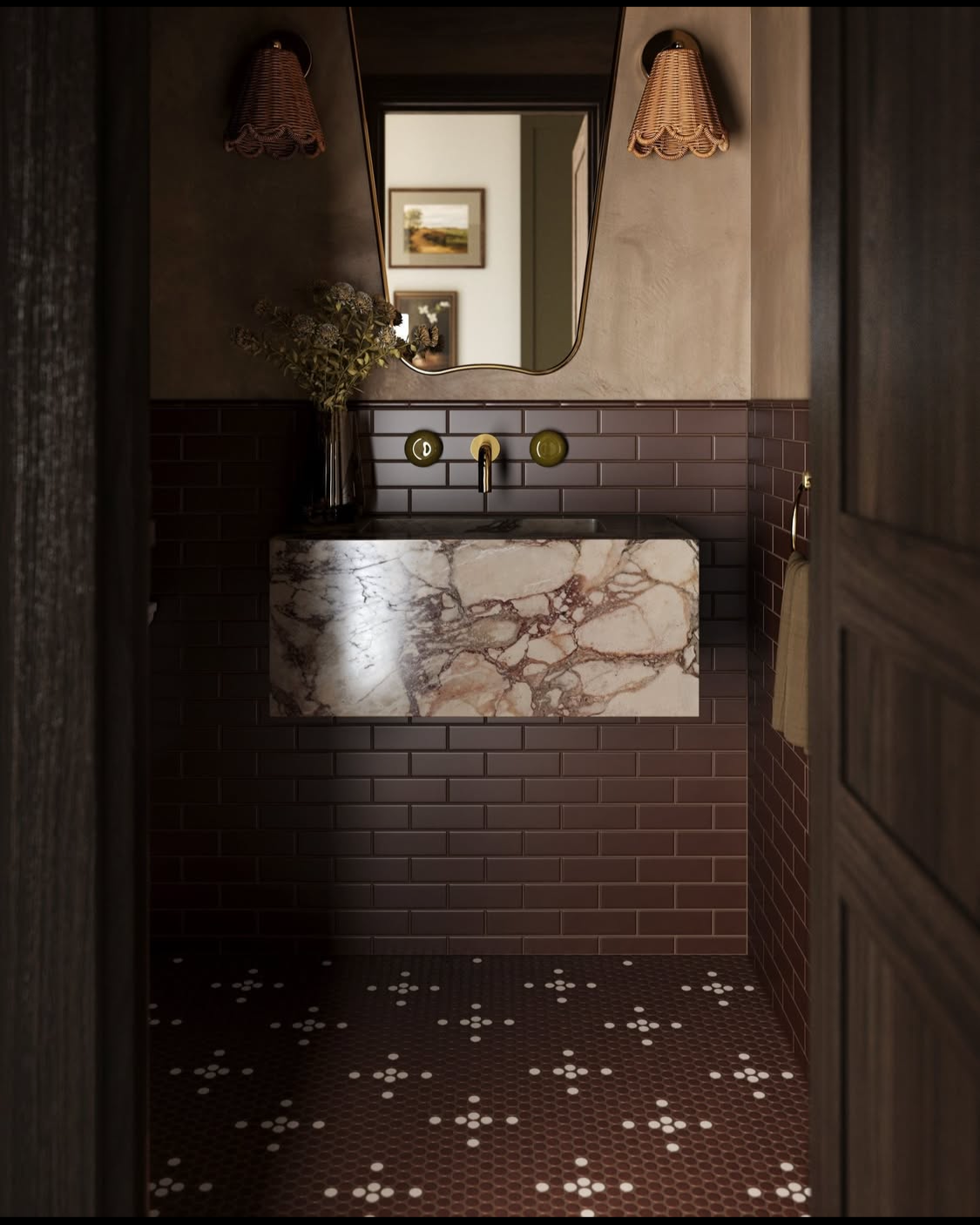
The remaining wall area does not necessarily need tile at all.
We understand that the last 8 years in interiors were influenced by simple stone slabs covering everything from top to bottom for a sleek, contemporary and somewhat minimal look. But this era is coming more and more to an end as people lean again to more character and interesting transitions and are tired of this “2022 look” .
In lots of cases, a beautiful solution is to embrace a more traditional, dare I say timeless, approach and combine tile with another finish. A carefully chosen wallpaper, painted plaster, or even tongue-and-groove panelling can soften the room and create a richer composition. It’s the choice of finishing and detailing that is used which will now update and freshen this look.
The result is a bathroom that feels layered, distinctive, and practical at the same time.
Tile Layout Matters More Than People Realise
Another overlooked detail is tile layout. Even the most beautiful tile loses impact when installed without intention. Straight grid layouts are often used by default, but other patterns like stacked vertical layouts, herringbone, brick bonds, or framed borders (on the floors!) can dramatically influence how a room feels.
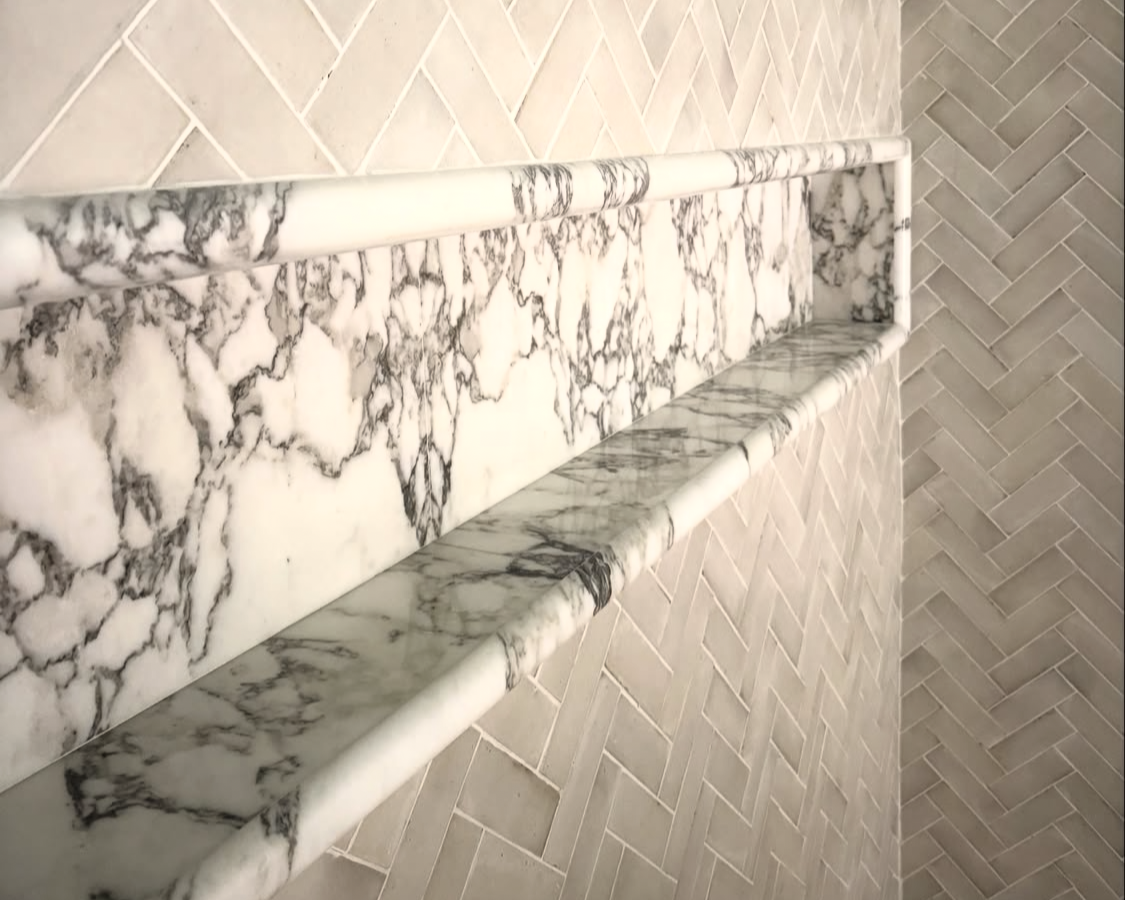
Photo: Qcreative Design
A simple subway tile becomes far more interesting when laid vertically or when framed with a contrasting border. Penny tiles can create subtle mosaics or transitions between spaces. Even stone tiles benefit from thoughtful alignment and proportion. Tile installation is not merely a technical step; it is part of the design language of the room and should speak to the character of the overall space.
Designing for Real Life Needs
The goal is not to avoid beautiful materials. The goal is to use them intelligently so they actually have the desired impact.
A tile that stains easily, becomes slippery when wet (happens a lot when wall tiles are specified as floor tiles..), or requires constant maintenance may look stunning in photographs but quickly becomes frustrating in everyday life. Durable finishes (which means REAL organic finishes and no fake marble printed-on-tile), well-considered textures, and practical layouts ensure that beauty lasts beyond the first impression.
We strongly believe that the best interiors quietly balance aesthetics and practicality. They impress without trying too hard, and they age gracefully because every material was chosen with purpose. Working with an interior design studio does not imply that we are end up filling your space with expensive surfaces. We help you composing materials in ways that support how you actually live and express what beauty means to you.
