
The seasonal reset: how to make your home feel new without buying anything
I love a seasonal change. I do miss the four distinct seasons in Germany a lot, but in Nigeria, the seasons change more dramatically: from dry to rain season. And with it the strong urge and deeply satisfying exercise of giving your space a reset too.
Is this the time for a shopping spree? Not really, at least not for me. What interests me more is to see my sanctuary differently, despite not purchasing anything new.
We tend to think that refreshing a space means shopping: a new cushion or a vase, or another decorative object. This can and will happen eventually, but we can achieve effective transformations without buying a single thing.
How did I achieve this over the last weekend?
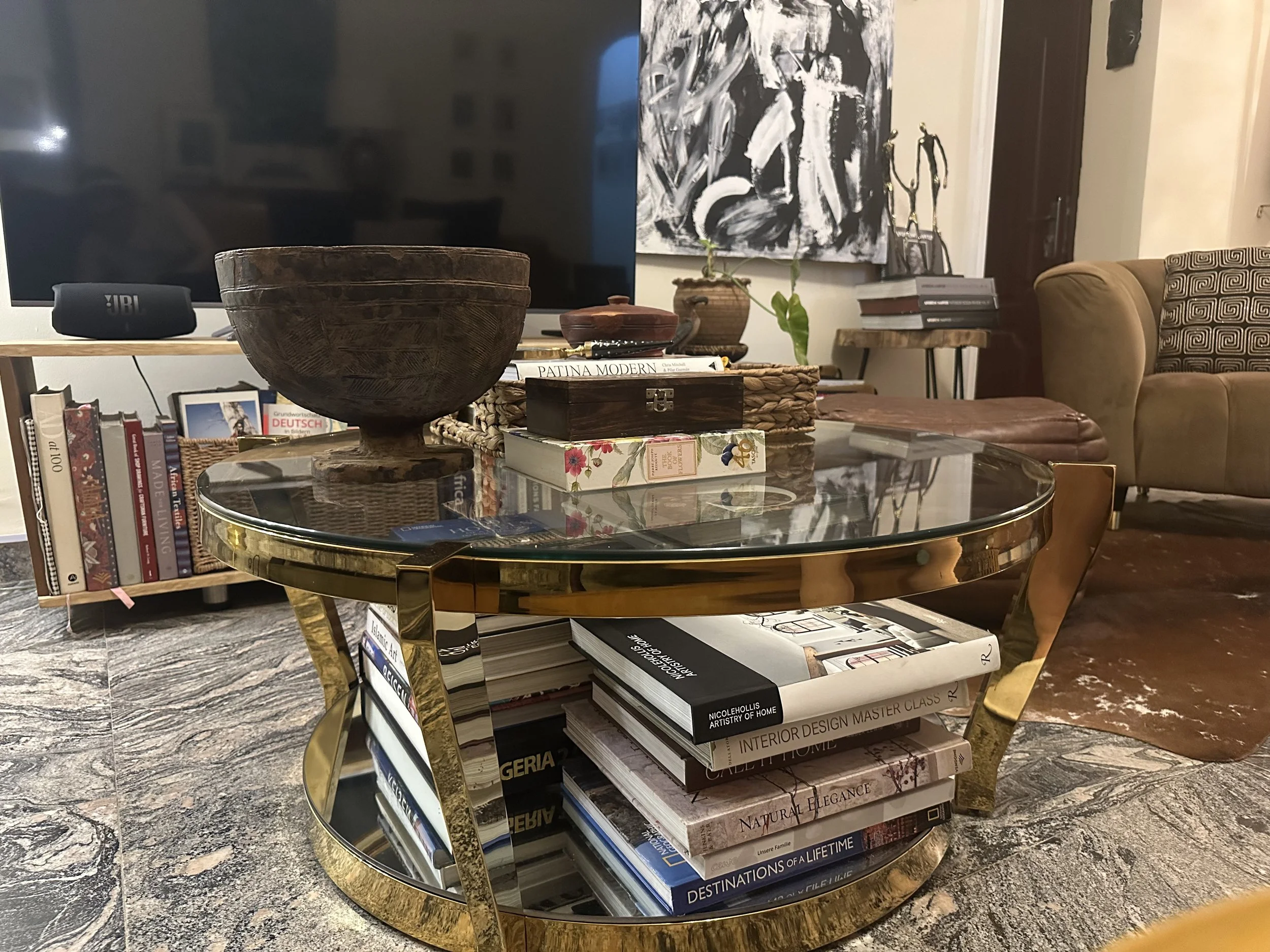
I moved the art and plants. I rearranged the books and gave the coffee table and side tables a new styling.
I changed the cushion covers and compositions. I took decor and art out of storage and fooled myself that these pieces are as good as new. Because in some way they are: these little switches make the room you have lived in for years feel slightly unfamiliar - in the best possible way.
When you move the chair you have always had in the corner to somewhere completely unexpected, you've changed the composition. And sometimes, that's all it takes to experience your space again.
Start by looking at your home differently
We become visually blind to our own surroundings. The console has always looked like that. The books have always been stacked there. The artwork has been hanging above the sofa for five years and somehow, in your head, the cushions belong to that chair. We stop seeing these things.
Interior designers do something slightly different: we constantly question the composition.
We constantly ask: what happens if this moves? What happens if I remove that? Would this artwork be better somewhere else? Could these three objects become one vignette instead of three separate objects?
That same exercise can transform your home. Think of it as a seasonal edit rather than a seasonal shopping list and create a new atmosphere and experience all by yourself, simply by following these tips:
1. DECLUTTER BEFORE YOU DECORATE.
Before you start moving things around, take things away. Not just the obvious clutter, but also the decorative clutter. Look for objects that have been sitting somewhere simply because they have always sat there. Search for books you don't particularly care about. Or think about decorative pieces that have lost their impact because you have become accustomed to them.
Remove them. Put them in a box or another room temporarily. Observe how this makes you feel and what you truly miss or value. The first step is simply to create space.
2. EDIT. THEN CREATE A CLEAN SLATE.
This is one of my favourite design exercises. Take everything off a console, coffee table, bookshelf or sideboard. Now clean the surface properly and look at it completely empty.
It will probably feel slightly wrong at first which is precisely the point. An empty surface gives you the opportunity to make a new decision rather than automatically recreating the old one.
Then ask: what actually deserves to come back? You may discover that half of it doesn't. And the pieces that do return will suddenly feel much more important.
3. START WITH ONE HERO PIECE.
Don't start by placing five little objects and trying to make them work together. Start with one thing you love.
This could be a beautiful vase, a sculpture, or a lamp or special stack of coffee table books.
Do you value a piece of antique furniture or a large artwork? Make that your anchor, then build around it. Think about height, scale, texture and negative space rather than simply filling the surface. A good vignette doesn't need many objects. Rather, it needs the right relationships between them.
4. CREATE NEW VIGNETTES WITH OLD THINGS
This is where the fun begins. Take objects from different rooms and introduce them to each other. Move the vase from the dining room onto the bedroom console. Take the books from the coffee table and place them beside a sculpture. Put two objects together that have never shared the same surface. Try odd numbers, different heights and also leaving more empty space. You might discover that something you have never particularly loved was simply in the wrong composition.
5. MOVE YOUR ART
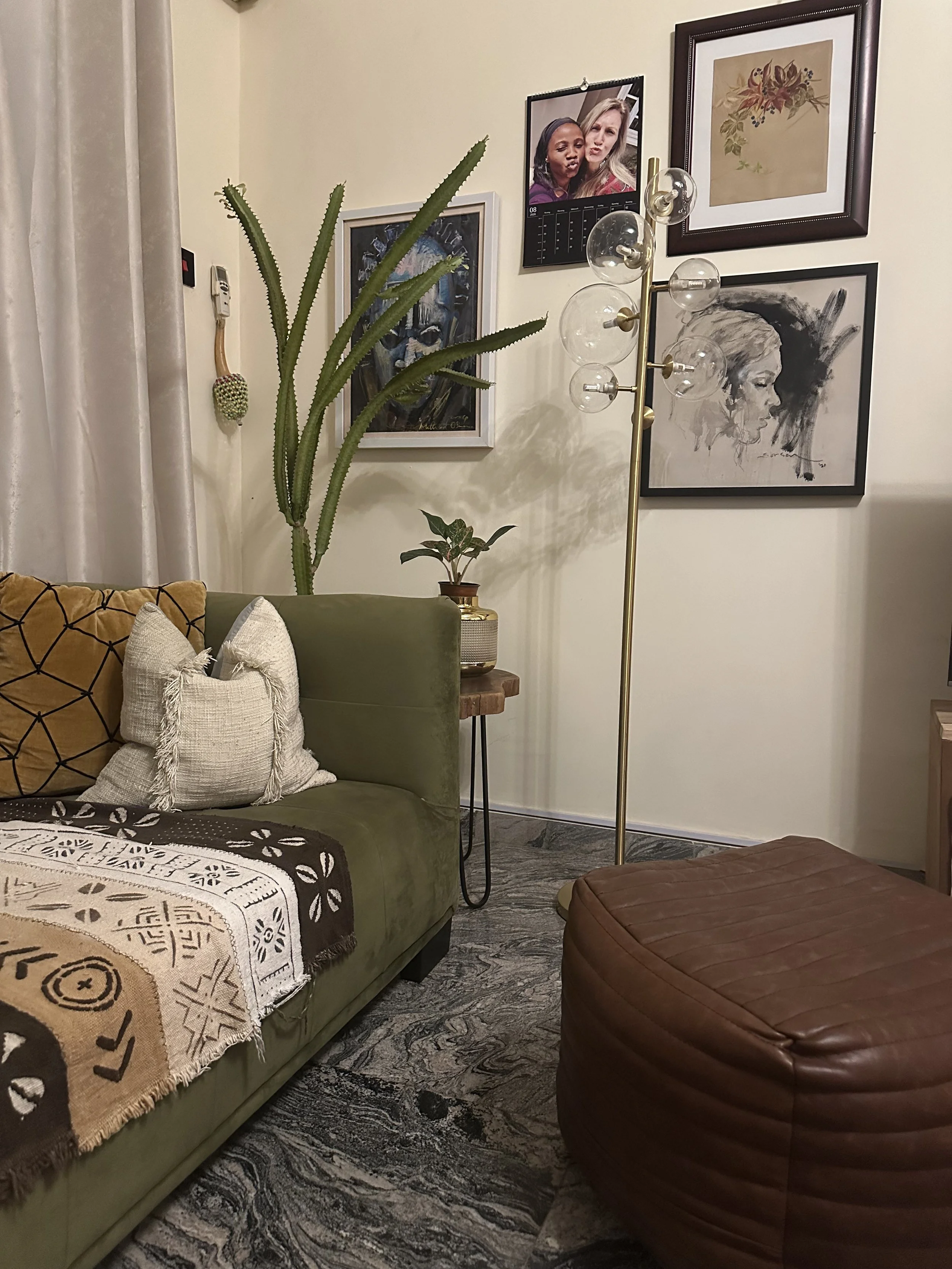
This is one of the easiest ways to completely change the feeling of a room. And chances are, you already own something you could use. Look around your home and perhaps your storage.
Is there a painting you've forgotten about? A print that hasn't been hung yet? Or do you have an old photograph sitting in a cupboard? Could you fathom a piece that is currently above your bed work beautifully in the hallway?
Hang your art afresh and somewhere unexpected.Art doesn't necessarily have one permanent address. Moving it can completely change how you experience both the artwork and the room around it.
6. CHANGE THE TEXTILES
You don't need a new sofa to make your living room feel different. Simply change the pillow covers first and see how far this can take you. This is one of the simplest and most affordable seasonal refreshes. Try introducing warmer or cooler tones, different textures or a contrasting pattern to what you currently have out there. Swap up the fabrics and use linen instead of velvet or a deeper colour for the cooler, wetter months whilst you lean towards lighter, natural fabrics for warmer periods.
And don't underestimate the power of simply rearranging the cushions you already own. Move them from the sofa to an armchair or mix the combinations differently. You could turn a patterned cushion around so that it sits beside a completely different textures. Small changes can have surprisingly large visual impact.
7. REARRANGE THE FURNITURE
Before you decide that you need a new chair, try moving the one you already have.
Change the orientation of the sofa or pull a chair away from the wall. If your space allows it, do create a new conversation area. Move a side table or turn the rug.
Sometimes the problem isn't the furniture. It's the floor plan we have become accustomed to. Even moving one substantial piece can change the way you move through a room - and therefore how you experience it.
8. SHOP YOUR OWN STORAGE
Your storage room may be the best homeware shop you already own.
Spend an afternoon, dust it all off and go through it. I am sure there are at least some forgotten artwork, old cushion covers, maybe lamps, ceramics and vases, books, textiles, trays or baskets, objects you collected on travels and other pieces you once loved but simply stopped seeing.
Bring a few things back into circulation. And just as importantly, put a few things away. Not everything needs to be displayed all the time, even though this discipline can sometimes feels challenging for those of us who appreciate a layered interior. From my own experience, some pieces become exciting again precisely because you haven't seen them for six months.
9. DON'T TRY TO MAKE EVERYTHING MATCH
A refresh is an opportunity to break your own patterns. If you've always grouped objects by colour, try grouping them by material. If you've always created symmetrical arrangements, try asymmetry. If everything is currently neutral, introduce one strong colour as a surprise element.
If the room feels very polished, bring in something imperfect, old or handmade. Contrast creates interest. And often, the most memorable compositions are the ones that weren't too carefully coordinated. At least that’s how it seems.
10. LIVE WITH THE NEW ARRANGEMENT
Don't decide within five minutes that something doesn't work.
Live with it a little. Walk past it in the morning. See it in daylight and at night. Sit in the room and notice what catches your eye.
Sometimes an arrangement that feels strange at first simply feels unfamiliar because you're used to the old one. And sometimes you'll realise: No. That really doesn't work.
That's fine too. Move it again. There are no permanent decisions when you're shopping your own home.
The beauty of a seasonal refresh
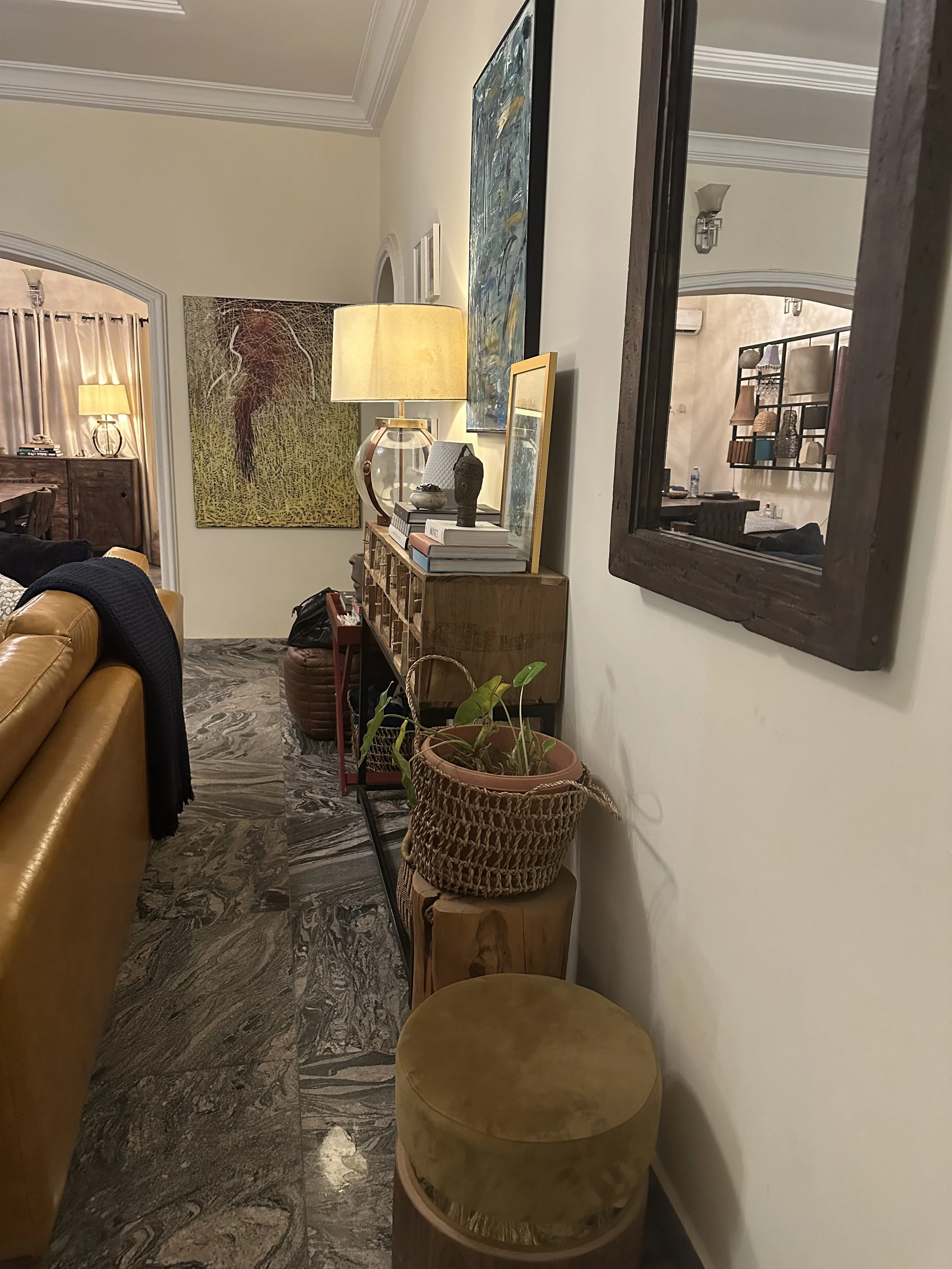
Perhaps the most interesting thing about this exercise is that it changes your relationship with the interior. It gives you the opportunity to notice the painting again or remember why you bought that ceramic piece. You may see a corner that you had completely stopped noticing.
Your home becomes interesting again because you have allowed yourself to experience the things you already have differently. Perhaps that's a more sustainable way of thinking about interiors in the first place.
Good design isn't always about acquiring more.
Sometimes it's about knowing what you have, editing it thoughtfully and giving it a new life.
So before you buy another cushion, another vase or another piece of furniture, try moving something around. You might be surprised how quickly you fall in love again.
