
Pressure is a privilege
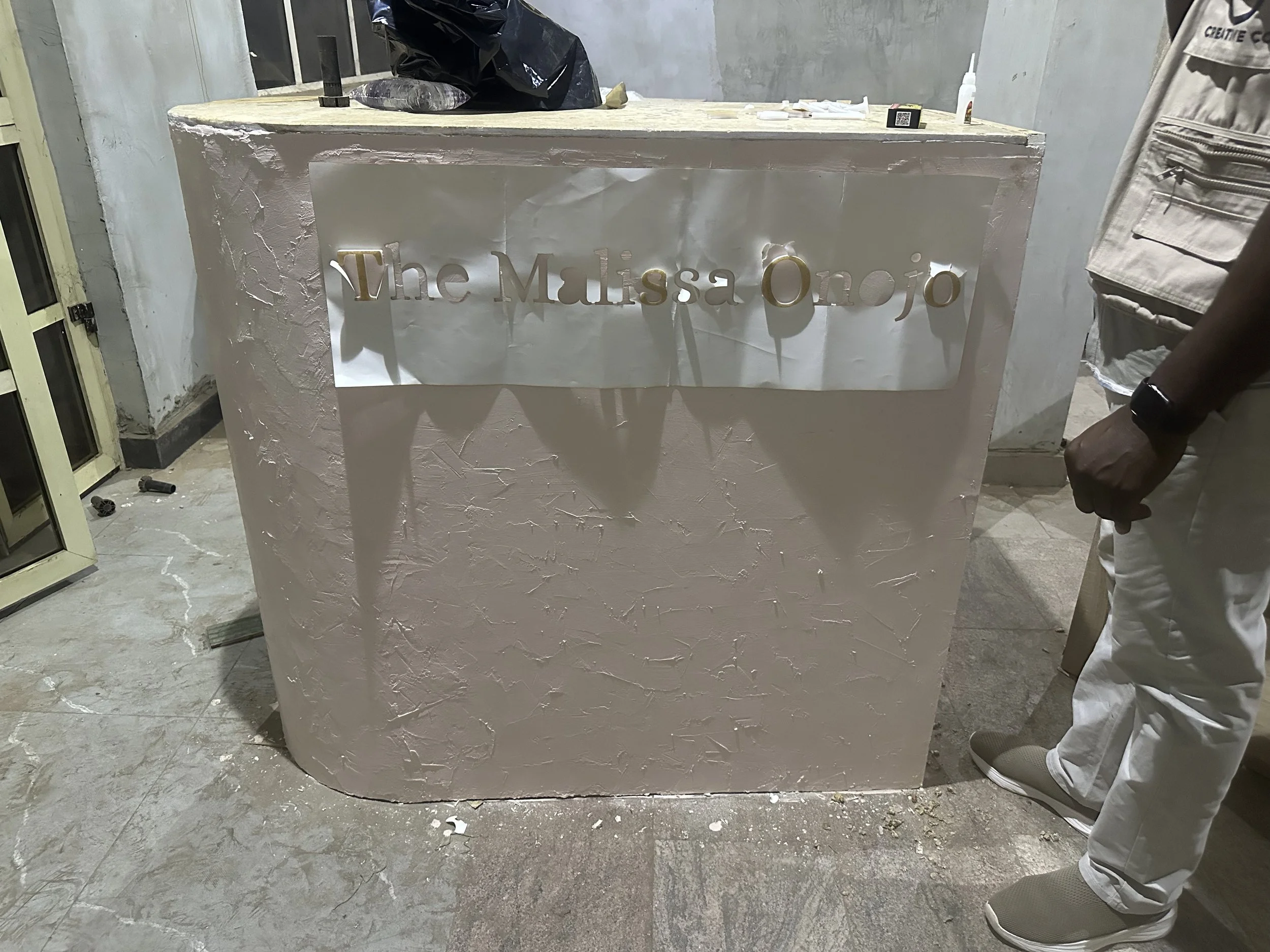
Counter table production: Textured plaster meets travertine, local wood and brass details.
On the kind of work that stretches you and why this matters.
No project is alike. Some move smoothly. Others don’t and stretch you in unexpected ways, and even shift how you think entirely about design.
Our commercial project TMO Boutique was one of those projects. The design brief was clear but it came with a different set of demands. Sustainability wasn’t a concept we could interpret loosely; rather, it was the main constraint. Materials had to be reconsidered and design processes were questioned by ourselves throughout the concept development and execution. And in this vein, local production was pushed further than what felt immediately comfortable. It meant working with what was available and not always what was ideal at first instinct. We constantly had to rethink finishes and sourcing methods. And rethinking what “good” actually looks like when the parameters of what a successful project is seen as, change.
This is the moment when the stretch begins.
There is a particular kind of pressure that comes with thinking differently and doing things in a way you’re still figuring out as you go. When the usual shortcuts don’t apply and familiar references don’t fully translate, you have to slow down as a designer and ask more questions. Not only to the client, but to yourself and the entire process, suppliers, artisans and expand your research, even during production and execution.
Local production, especially when pushed beyond standard solutions, doesn’t always follow a predictable path. Timelines stretch. Communication becomes inconsistent with outcomes that surprise you to say the least. And when you are already working within tighter constraints, i.e. sustainable sourcing, custom processes, material limitations etc., there is less room for things to go wrong.
So you stay closer to the process and take project management more serious. This means to be more present on site and more involved in decisions that, ideally, would already be resolved. Micro-managing is no fun and our urge to control everything certainly didn't grow with time, but knowing that the margin for errors is smaller translates to higher demand in project monitoring in the moments where things don’t quite align. Adjusting your expectations without lowering your standards is the main exercise. You begin to understand what is actually possible - not in theory, but in practice.
And in all this manoeuvring and increasing pressure, I listened to one of the last episodes of the Alice Lane Design Podcast that featured Houston-based Benjamin Johnston when he spoke about his own experiences of projects stretching his firm’s design processes and made reference to one line he keeps coming back to: “pressure is a privilege”. And I felt that. Not in a romantic way, but in the sense that being trusted with work that pushes boundaries will inevitably ask more of you. It demands more clarity, structure, and - oh, beloved Nigeria - more resilience. And certainly more responsibility in how you navigate it all.
The goal is not only to merely complete the project. Our aim is to come out of it with a sharper process and a clearer understanding of what works, and what needs to change. Understanding where to insist or to adapt and where to draw the line.
Projects like TMO don’t just result in a finished space. They leave you with a different way of working. We definitely feel that our work moving forward will be more intentional and grounded in reality than it already was before. Despite the albeit mayhem of local suppliers whose seemingly solid online presence does not match their customer service in any way, we are still committed to building locally and pushing materiality and processes in a way that feels relevant to where we are.
The difference is that projects that demand a lot of you come with a deeper understanding of what that actually requires. It stretches you the most, and at the same time often is the work that defines you the most as a designer.
