
Designing what endures - on art, science and the lasting power of human-centred interiors
There are questions that feel timeless in design, and then there are questions that refuse to stay theoretical. When I was invited by Ahmed Bello and Jamil from Treuhandesign to join a roundtable discussion on whether architecture is art or science, it quickly became clear to me that this was not about labels. While the debate was heating up, I was drifting into my understanding of interior design and the sense of responsibility attached to it.
To discern whether architecture, or in my case, interior design can be considered first art before science art or vice versa, sits another, more urgent question that also every architect should answer for themself: what makes a space truly sustainable?
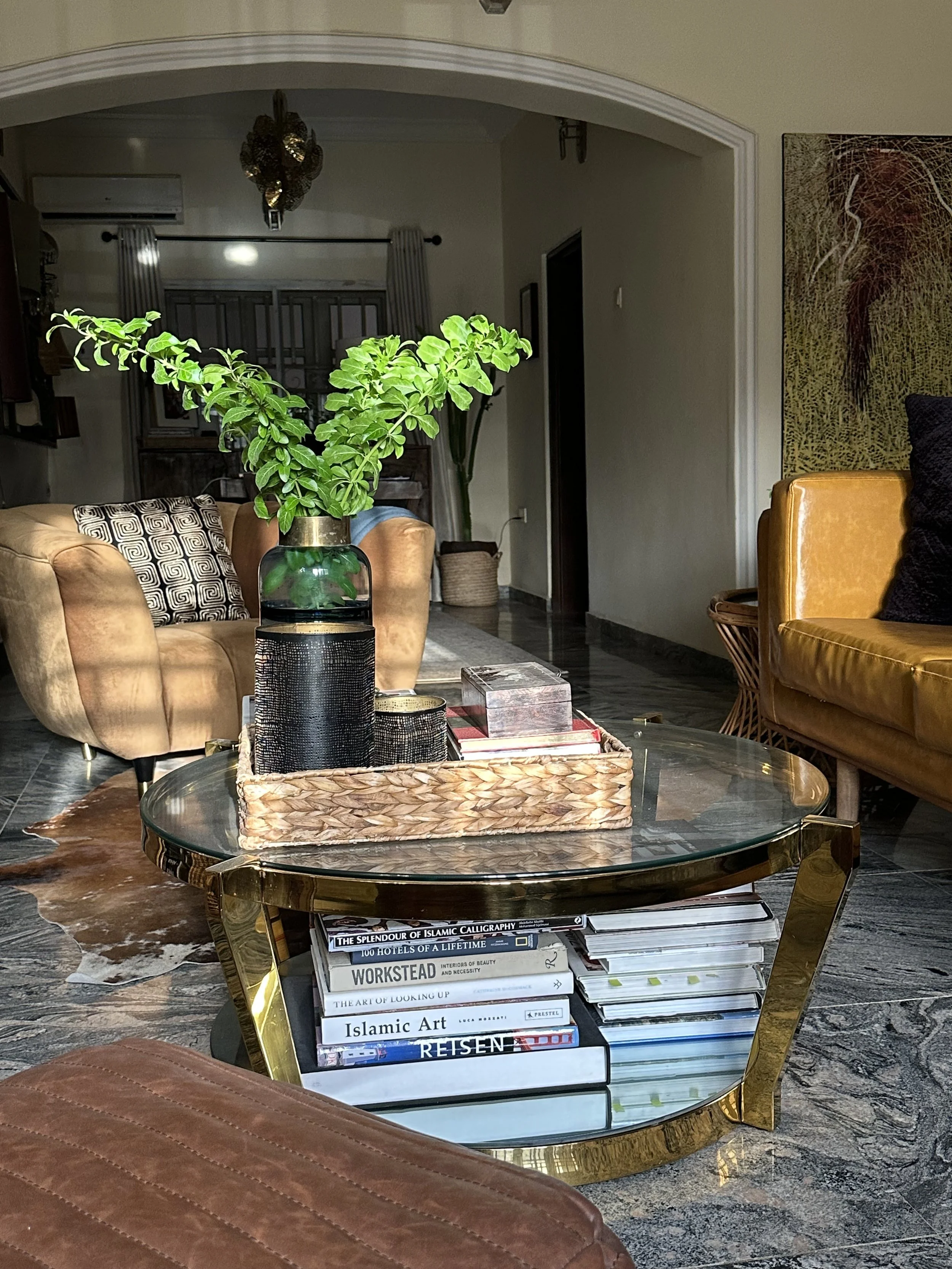
Our work as synthesis discipline
At AD Design, we don’t experience interior design as a choice between art and science. We experience it as a synthesis, a blend that cannot be separated in phases.
Art gives a space its voice as an own narrative. It should be the emotional register and has ability to hold identity, memory and culture. It goes far beyond actual art or paintings on the wall. In fact, despite being an art lover, it does not require a single painting or photograph to create a sensory, soulful and cultural interior that carries its own narrative.
Science, on the other hand, gives it structure. The scientific foundation concerns about performance, durability, comfort, and measurable impact.
All these are simultaneous layers and come together when you place people first. Our human-centred design approach gives the whole design direction, anchoring every decision in how people actually live. A palette is never just colour; it is also light reflection and mood regulation. A material is never just texture; it is also wear, maintenance, and time. A layout is never just composition; it is movement, behaviour, and use. The strongest spaces are not designed in sequence. They are resolved in tension and collaboration of all disciplines involved.
Testing the balance
How can we measure a truly sustainable space? It certainly demands data-lifecycle assessments, embodied energy, sourcing methods and overall carbon impact. This is the language of science, and it is essential. But data alone does not ensure longevity.
A space can be technically efficient and still be unsustainable. Because if it is not lived in, not connected to, or not valued, it will be changed, eventually. And change, in the built environment, consumes resources. It creates waste, thus resetting the cycle. Sustainability is not only about how a space is made. It is about how long it is kept and cherished.
How do we measure something as abstract as emotional durability? What makes some spaces endure and others not? Tactile experiences are certainly part of it; materials that hold memory or surfaces that invite touch. Think of vignettes or compositions that feel resolved and layered, rather than temporary and too trends-driven. When we work with bamboo, raw timber, patinated metals, or textured finishes, the intent is not purely aesthetic. These materials age and evolve. They carry use without asking to be replaced and live WITH you. And in doing so, they reduce the impulse to redesign.
In a discipline where interiors are the most frequently altered layer of the built environment, this becomes a strategic act. Buildings may stand for decades, but interiors are often reconsidered within years. Finishes, furniture, and fittings are where cycles of waste repeat most rapidly. To design interiors without considering longevity is to ignore where sustainability is most fragile.
Beyond efficiency
There is a tendency to equate sustainability with restraint - with minimalism, reduction, and the removal of excess. While necessary when it matters, this is not sufficient to me. A minimal space that people disengage from will be redesigned in a short time. A meaningful space, however, will be preserved. The distinction is subtle, but critical. Minimalism reduces consumption at the point of creation. But creating something meaningful reduces replacement over time. The future of sustainable design is not simply less, but intentional curation of objects that matter most personally to the user.
This is where human-centred design becomes indispensable. Without it, art risks becoming self-referential. Without it, science risks becoming abstract. Human-centred thinking translates both into experience. It asks how a space feels at different hours of the day, how it supports routine, how it accommodates change, how it reflects identity. It considers ergonomics and psychology, culture and behaviour, ritual and use - not as add-ons, but as the framework within which design decisions are made. The question shifts from “Is this beautiful?” or “Is this efficient?” to something more enduring: “does this improve how someone lives, feels, and functions over time?”
Reframing the debate
So, is (interior) design art or science? The answer is both, but not equally at all times. There are moments that require intuition, and moments that require evidence. What matters is not the category, but the coherence. Science ensures responsibility while art ensures relevance. Human-centred design, ultimately, ensures continuity. Without science, design cannot justify itself. Without art, it cannot be remembered. But without people, it cannot endure. That’s the difference of what makes a house a home - our daily goal in our work.
At AD Design, our work is guided by a simple but demanding position: we do not design spaces to be admired briefly. We design them to be lived in, returned to, and kept. Because in the end, sustainability is not only a matter of performance. To us, it is more a matter of attachment. And attachment is no fleeting currency. We are looking for connections that grow with us, that allow us to grow but yet can be understood by us in its core. This is the same for successful spaces. The most sustainable space is not the one that proves itself once, but the one that continues to matter over time.
