
When did interiors become masculine or feminine?
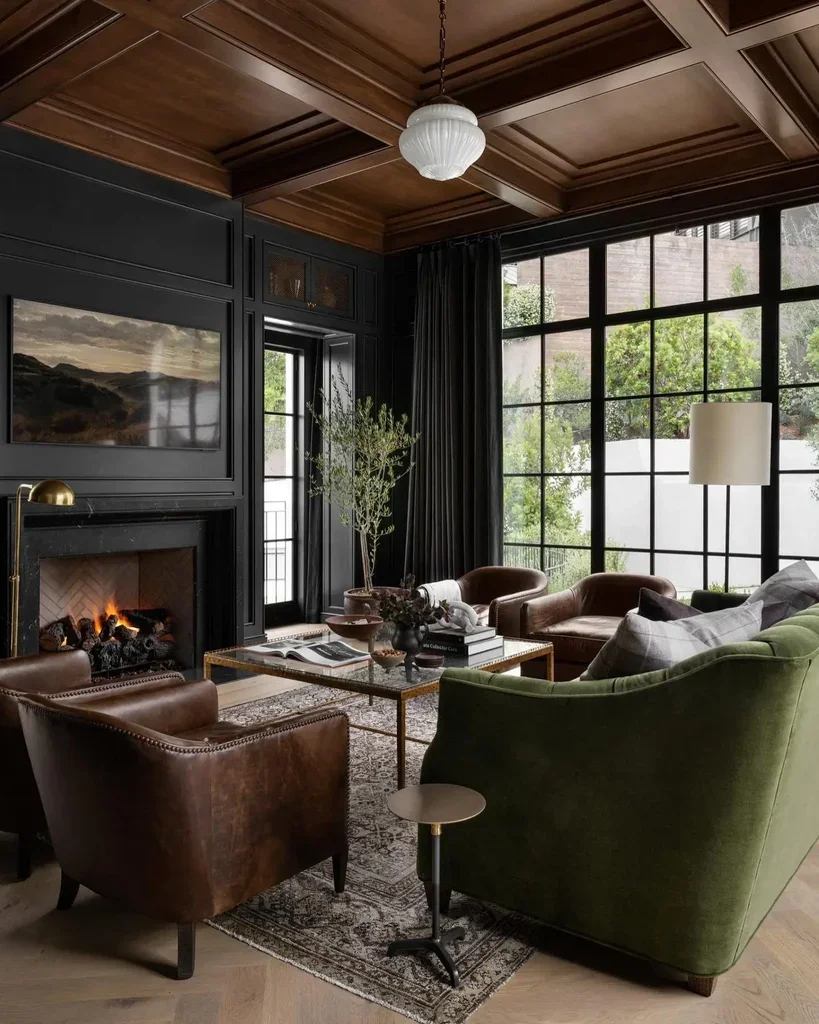
Design: Candace Plotz Design
This may be a controversial topic to some. I am also surprised writing about it because until last week, I have never spent a thought on this at all. It was Suzie Anderson’s wonderful YouTube channel with a video on “Masculine Interiors” that made me ponder deeper.
There are so many slightly strange expressions when we talk about interiors, this designer lingo: something is having a “moment”, juxtaposition, waiting until the room “speaks to you”, observing the “visual weight” etc. And we describe rooms as masculine or feminine almost without thinking about it.
Why do we tag a dark library with walnut walls, leather, bronze and heavy furniture “masculine” and a room with soft colours, curved furniture, delicate fabrics and flowers “feminine”? It feels right and I have done it countless times before. But who really decided that walnut belongs to men and velvet belongs to women? And more importantly, what are we actually describing when we use those words?
While watching Suzie Anderson speak about masculine interiors, it made me think that I love many of the interiors that would traditionally be described as masculine. I love dark timber, beautiful leather, strong silhouettes, deep greens and browns, substantial furniture and rooms with a certain restraint. And I’m a woman.
I’ve never seen that as contradictory. But it did make me question the language we use around design and the assumptions hiding underneath it.
The problem with “masculine” and “feminine”
Interior design has always reflected the culture around it.
For centuries, the home was also a reflection of social roles. Certain rooms belonged to certain people. The library or study was associated with the man of the house while the drawing room or boudoir might be associated with women.
Over time, those associations became aesthetic shorthand; dark wood became masculine and floral wallpaper became feminine. Leather became masculine, silk became feminine. Straight lines were seen as masculine, while curves obviously are associated closest with women. Even colour has somehow been given a gender, but none of these things actually have a gender.
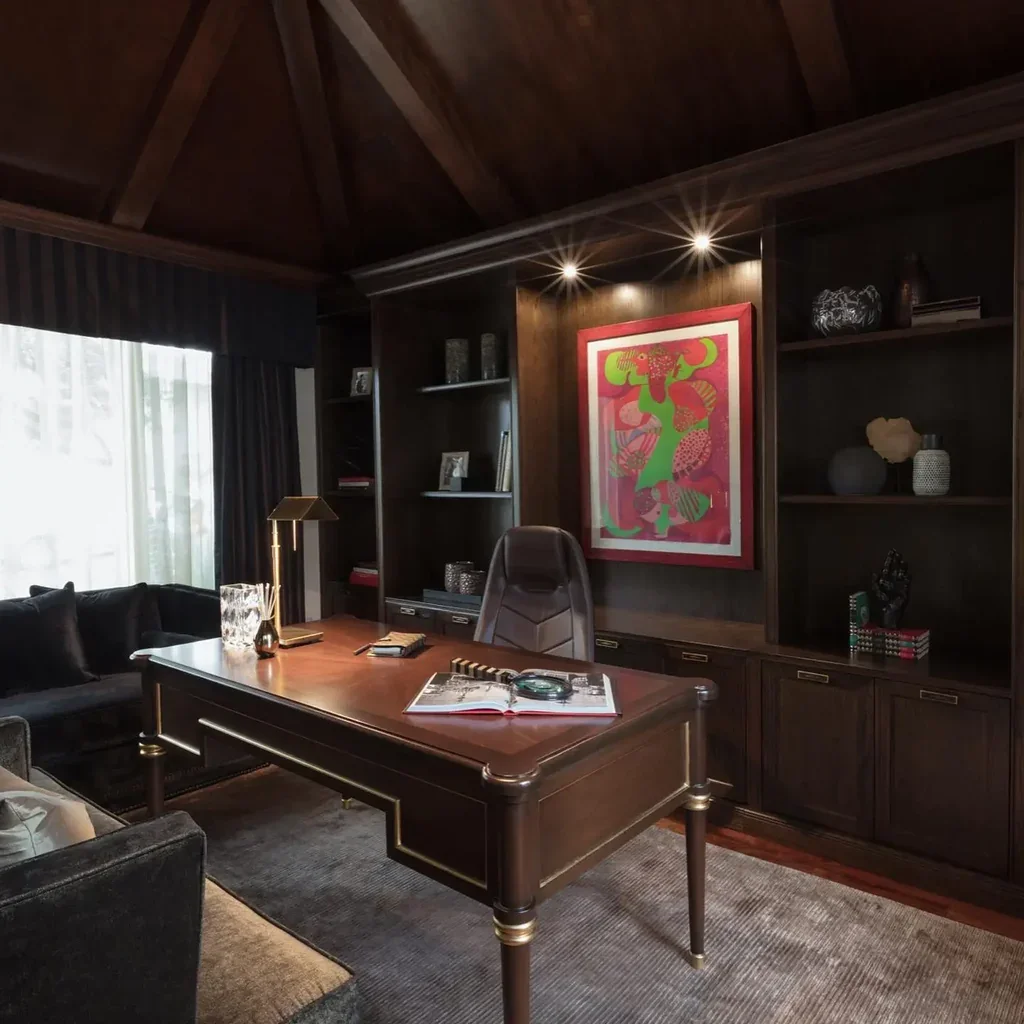
Photo: Lino Blanco
A material doesn’t know who is sitting on it. A room doesn’t become masculine because a man walks into it and a woman doesn’t become less feminine because she prefers a dark, architectural interior to a pastel one. That distinction matters, because design is a form of identity, but identity is not the same thing as gender.
Qualities I love
When I look at an interior that we tag as masculine, I’m usually responding to something else. Maybe there is lots of - sorry, design lingo - visual weight with furniture that is tailored and substantial. Or the palette is restrained with very little unnecessary decoration. Perhaps the room feels confident without trying particularly hard to impress you.
Those are qualities I love. But none of them belong exclusively to men.
You could create exactly the same feeling using a completely different palette. A room can be pale and still feel incredibly strong. It can be feminine in colour and architectural in character. The space can have curves and still feel powerful. It can have flowers and still feel sophisticated. This is where I think the conversation should be heading to.
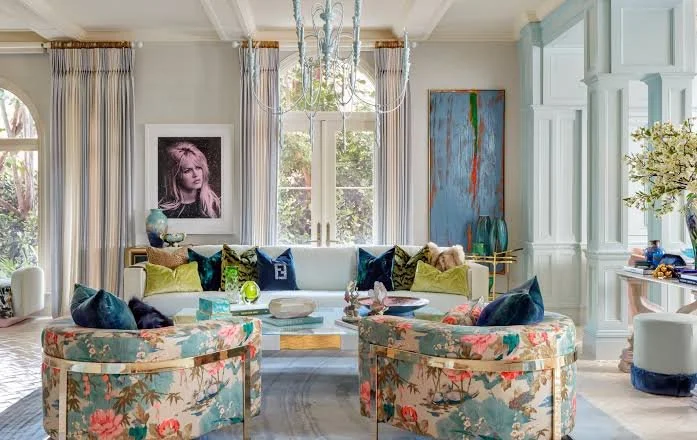
Is there such a thing as feminine design?
Of course there are interiors that we instinctively describe as feminine. The characteristics are obvious: softness, curves, lace, silk, florals, lighter palettes, delicate detailing, lots of decorative objects etc.
But again, these are visual languages, not rules. We have historically attached these qualities to women because of the way women were expected to behave - soft, pretty, decorative, nurturing. While men were expected to be strong, serious, practical and restrained. So some of what we call “masculine” or “feminine” design isn’t really about aesthetics at all but about the roles we have historically assigned to men and women - and then projected those roles onto their homes.
I don’t want us to design gendered homes.
I want to design homes for people and people are complicated. A client might want a very minimal bedroom but an exuberant dining room. They might love antique furniture but also want something very contemporary. They might want a dark study and a pink bathroom. They might want linen, leather, marble, florals, chrome and African textiles all in the same house. Why shouldn’t they?
The most interesting interiors I’ve seen rarely fit neatly into one category anyway. They are layered, they evolve and always contain contradictions. And, importantly, they tell you something about the person who lives there.
Perhaps the better question is: what do you want your home to say?
Do you want it to feel calm? Dramatic Grounded? Playful? Collected? Minimal? Sensual? The answer doesn’t need to correspond to whether you are a man or a woman. And I think this is particularly important now, when our homes are becoming increasingly personal. We are no longer designing rooms simply to fulfil a prescribed role.
We work from home. We entertain differently. We collect art from all over the world, we travel more than any generation before us. We inherit things from different areas and levels of craftmanship. We mix cultures, adapt and grow and also change our minds from time to time. Our homes can hold all of that.
And yet, I will probably still use the word “masculine”. The reason is simply pragmatic: language is useful. Sometimes I see an interior and “masculine” is simply the quickest way to describe the mood I’m seeing and convey a vision to a client which both understand. However, I want to be conscious of what I’m actually saying. When I call something masculine, I don’t mean this is how a man’s home should look. I mean it has qualities that we have historically associated with masculinity. There is a difference and we should be more comfortable separating the two.
If we stop thinking of design as a set of gender rules, we gain so much more freedom. I think it’s important to make your clients be aware of this and encourage to explore deeper of what truly speaks to them as an individual. A woman can love a dark walnut library and a man can love a floral sofa. And one room can contain both (my favorite twist!).
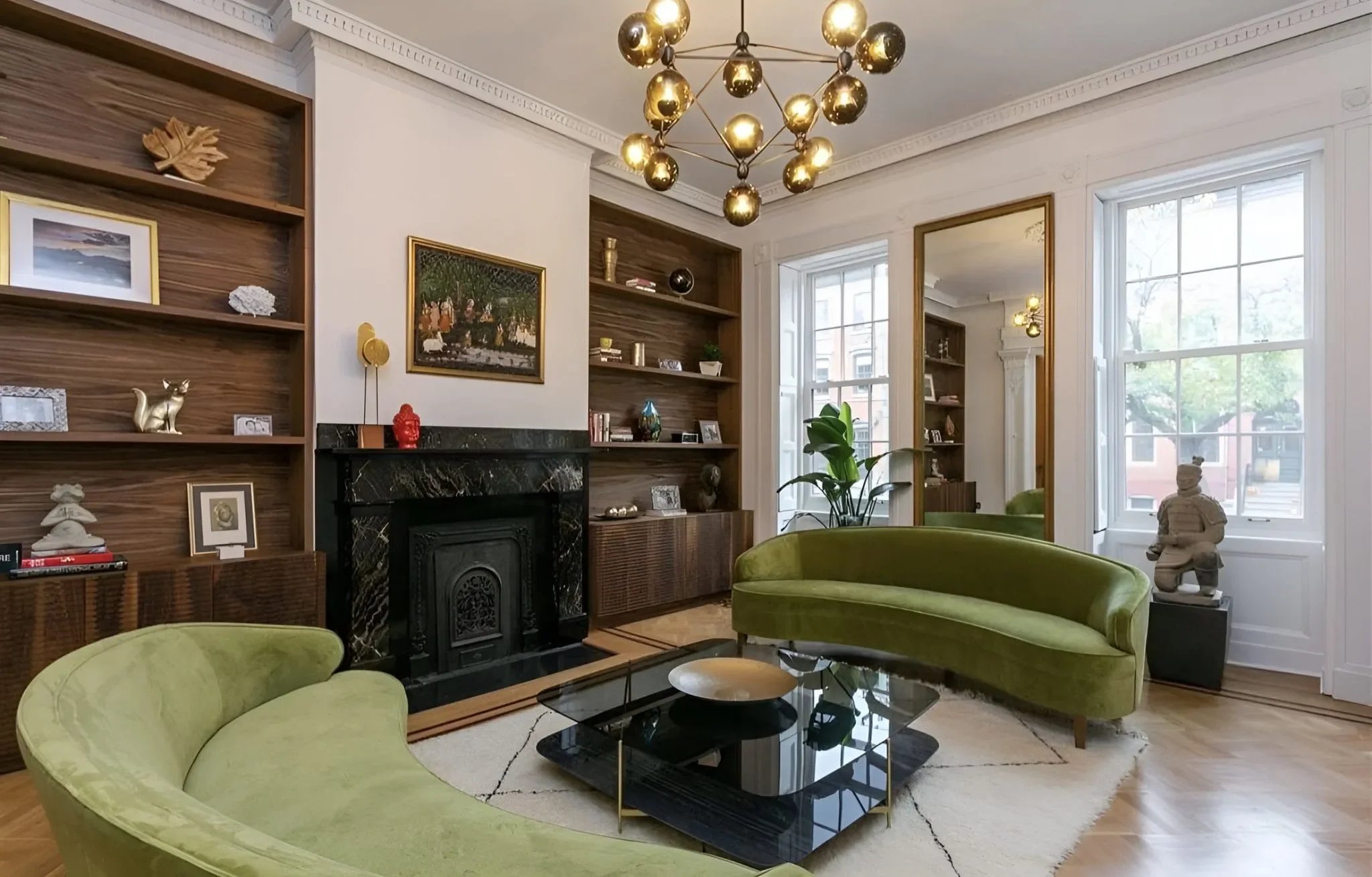
Photo: decorilla.com
Design doesn’t need to choose sides.
This is ultimately what I love about interiors. They give us permission to be contradictory. You can be drawn to restraint and still love ornament. You can love tradition and still want something contemporary. A room can feel soft and strong at the same time. You can love what we call masculine interiors without wanting to live inside a stereotype. You can simply reject the idea that your home needs to look a certain way because of who you are.
Our goal is to create interiors that feel like you. And if your version of “you” happens to include dark timber, leather, stone, flowers, curves and pink velvet?
Even better. That’s a much more interesting room.
