
Minimal Soul, Maximal Drama - Where Restraint Meets Richness
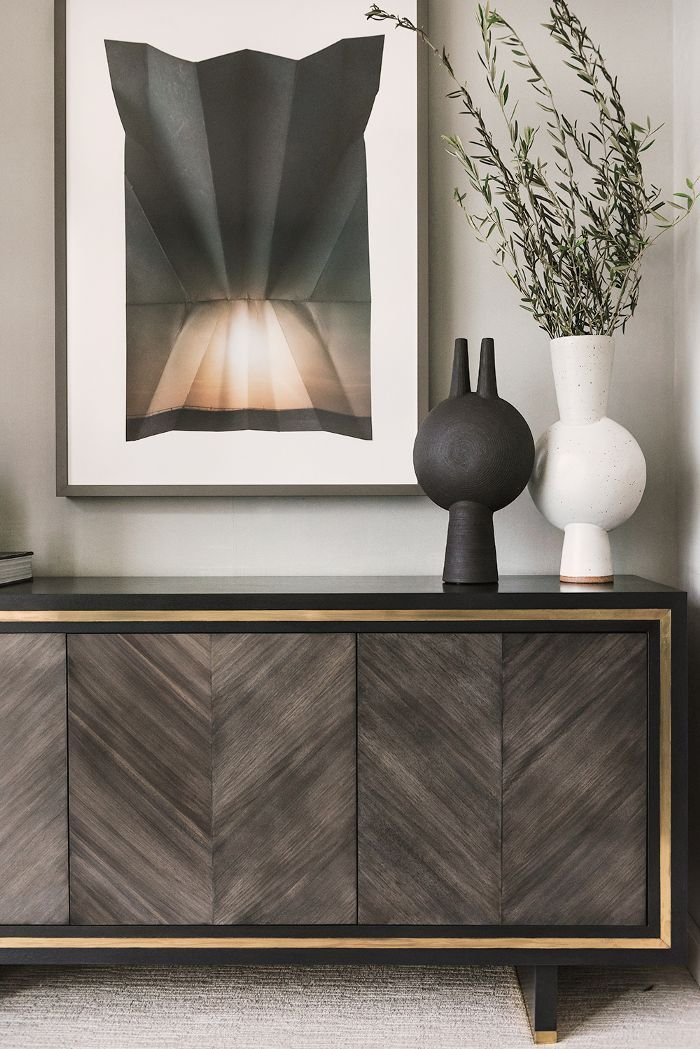
“I don’t want a house full of stuff,” my client said. “But I still want it to feel special.”
That statement captured the quiet paradox of modern design: a craving for calm, yet the desire for character. The need for space to breathe and ease of organization, yet the yearning for something memorable.
At AD Design, we have learnt that true sophistication often lies in this tension. But how do we pair minimal soul with maximal drama?
Minimalism doesn’t mean absence; it means intentionality.
It is the art of making space for air, light, and thought. It is allowing a room to breathe. Designers call this emptiness “negative space” - and it becomes part of the composition, a quiet pause that gives every object meaning and every texture room to speak.
Drama, meanwhile, does not always arrive with excess. It can emerge from proportion, from the way a sculptural vase holds stillness, or how light folds across a surface. It is in the boldness of form, the discipline of materials, and the patience to let simplicity do the heavy lifting. Drama, in this context, isn’t about opulence, but presence.
In this project, we are working on creating the harmony not from filling the room, but from composing it. Because restraint and richness are not opposites. They are partners in dialogue.
Designing the Balance: When Stillness Meets Statement
Designing a minimal space with drama requires confidence in simplicity and an understanding of visual rhythm.
In such interiors, every piece matters. Nothing is random, and nothing should fight for attention. Here, fewer elements must carry more weight. Think of the Japanese concept of Ma: the space between things that gives meaning to the things themselves. Or the quiet architecture of John Pawson, where light and shadow become materials. Or even the timeless interiors of Belgian designer extraordinaire Axel Vervoordt, where raw textures and sculptural furniture create an emotional gravity that makes silence feel full. These are the kinds of references that guide our approach.
A pared-back room becomes dramatic when proportion and materiality do the speaking.
A single wall finished in limewash or Venetian plaster can shift the entire mood; the subtle movement of the surface catches daylight differently every hour, creating living texture without ornamentation.
You can also draw drama through scale and silhouette.
A low, clean-lined sofa beneath an oversized pendant in brass or woven fiber; a single over-scaled artwork on an otherwise bare wall; a table in a material that feels ancient (marble, oak, travertine) surrounded by restraint.
The Power of Materials and Texture
Minimalism can be cold when it lacks touch, so texture becomes its heartbeat.
A boucle chair against smooth concrete. Or think about woven baskets beside sharp black steel. We love the interplay when rough linen curtains filter soft afternoon light. These combinations create tension and poetry and form a balance between masculine structure and feminine softness.
We also rely on natural imperfection to make spaces feel human: veined marble that tells a story, wood that isn’t overpolished, a handmade ceramic vase whose unevenness feels honest. These subtleties create a kind of “lived-in luxury” - understated, yet emotional.
Lighting: The Silent Dramatist
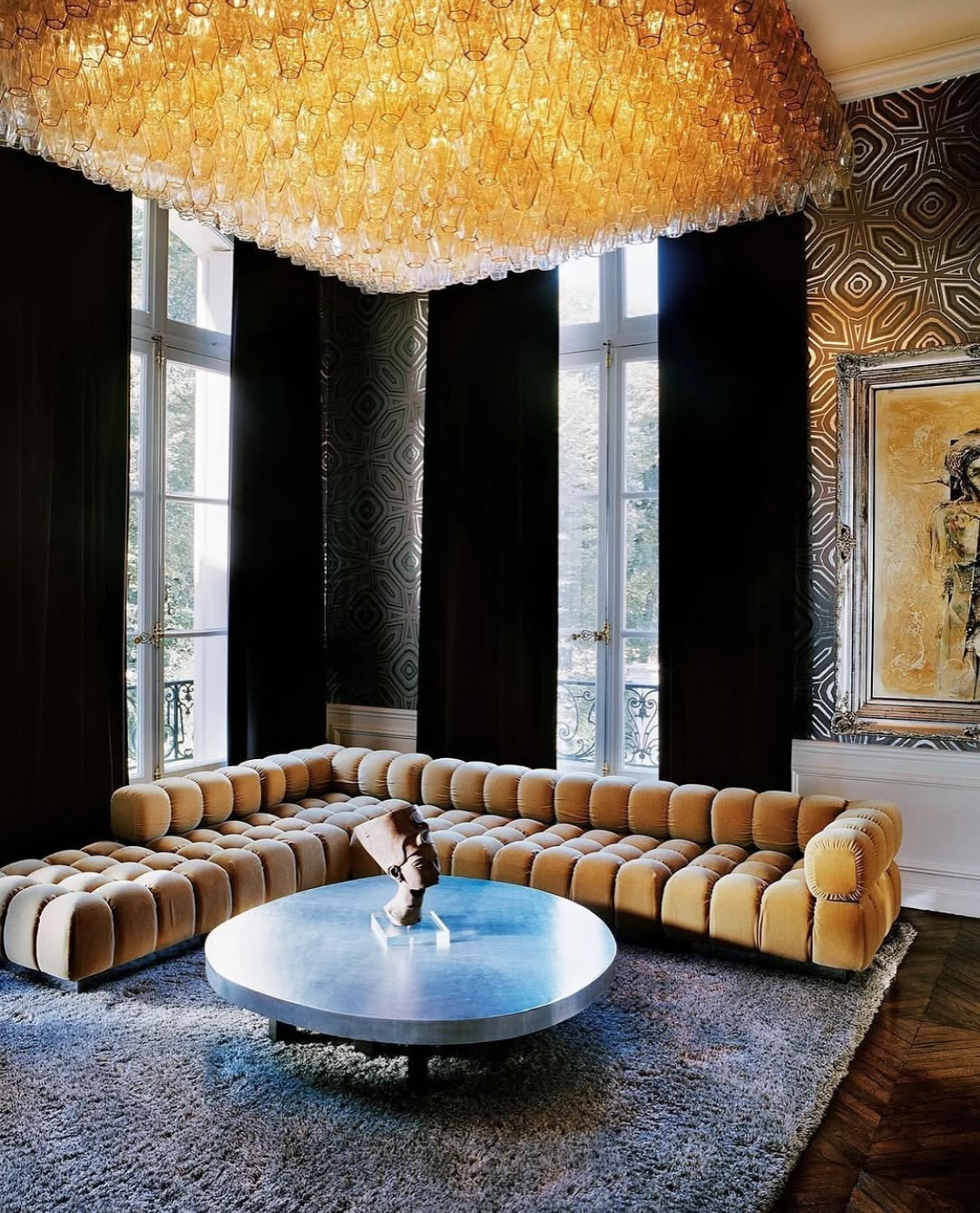
Photo: Villa Roxie (Paris), Lenny Kravitz
If minimalism is the soul, lighting is the pulse. Not only, but especially in a minimal dramatic space, light becomes the medium that shapes emotion.
A room should hold layers of light: soft ambient glow, sculptural accent, and one statement fixture that feels like jewelry.
Imagine a space where recessed light floats across textured walls while a single brass pendant drops into view like punctuation. Or wall sconces that cast elliptical shadows, adding depth to an otherwise simple corridor.
Light doesn’t just illuminate form; it creates it.
Color: Muted Doesn’t Mean Monotone
A limited palette can still hold great depth. Neutrals (i.e. stone, sand, taupe, ivory, charcoal) come alive when their undertones are layered.
Introduce contrast through warmth and coolness, through matte and gloss, through soft and sharp. Even a single accent (i.e. a deep teal velvet, a rust linen, or a bronze lamp base) can become the “drama” that anchors a restrained palette.
The goal is not to overwhelm, but to surprise; a controlled gesture that invites curiosity without breaking the calm.
The Essence of It All
At the end, designing “minimal soul, maximal drama” is about confidence in editing and courage in detail. It is the ability to hold space, literally and emotionally, without filling it.
The drama lives not in decoration, but in the dialogue between elements: light and shadow, rough and smooth, textured and glossy.
When done right, the room feels both quiet and alive. Because restraint and richness don’t cancel each other out. They complete each other. And that is where timeless design lives; not in abundance, but in intention.
